



























Cleaning Silver Jewelry: 5 Methods That Work
To clean silver jewelry, you don't need a miracle product: warm water, a little soap and a soft cloth are already enough for most cases. For very tarnished pieces, a simple reaction with baking soda and aluminum foil takes over.
This guide ranks five methods from the gentlest to the most effective, says which ones to avoid, and above all explains how to store silver so it no longer tarnishes. Practical tips, not a magic recipe: each piece of jewelry is treated according to its condition.
Why does silver tarnish?

Silver is not dirty when it tarnishes: it reacts. When exposed to sulfur compounds present in the air, it develops a thin layer of silver sulfide, first gray then black. This phenomenon is natural and harmless, but it accelerates under certain conditions.
Air, humidity and skin
Sulfur gases in the ambient air, cooking, household products and bathroom humidity are enough to dull a piece of jewelry. Sweat, perfumes, creams and hairspray also leave a film that accelerates the reaction.
Why jewelry you wear tarnishes less
Jewelry worn every day gently rubs against the skin and clothes, which polishes it. Conversely, a piece forgotten in an open drawer tarnishes quickly: it remains exposed to the air without ever being wiped.
Is tarnishing a defect of the jewelry?
No. All silver tarnishes, including good quality solid silver, because the metal reacts to its environment. What matters is knowing how to maintain it and store it properly, two steps detailed below.
The first signs of tarnishing silver
- a slight yellow or gray haze that dulls the shine;
- dark areas in the crevices and links;
- a brown or black tint on the less touched parts;
- a clasp or ring that darkens before the rest.
The earlier you clean it, the easier it is: a simple haze is removed with a cloth, while a thick black layer requires a longer recipe.
Before cleaning silver jewelry: identifying your jewelry

“Silver” jewelry is not all the same. Before choosing a recipe, look at what you have in your hands: the method that will not damage it depends on that.
Solid, plated or rhodium-plated silver?
- Solid silver (often stamped 925): can handle all gentle methods and the baking soda-aluminum recipe.
- Silver-plated or silvered: a very thin layer covers another metal. No hard rubbing, no abrasive products.
- Rhodium-plated silver: rhodium protects against oxidation. Soapy water and a soft cloth are enough.
Stones, pearls and glued parts
Hard stones that are well set (zircon, quartz) tolerate warm water. Pearls, amber, turquoise, coral and porous stones fear prolonged immersion and acids. Glued parts, on the other hand, do not tolerate hot water well.
Spotting the 925 stamp
Look for a small stamp on the clasp or inside the ring: “925” indicates solid silver, composed of 92.5% silver. Its absence does not mean the jewelry is plated, but it does call for caution.
When in doubt, a magnifying glass and a little raking light show if the metal is flaking in places, a sign of worn plating.
| Your jewelry | Suitable method | Avoid |
|---|---|---|
| Solid silver, light haze | Soapy water, cloth | Abrasive products |
| Very tarnished solid silver | Baking soda and aluminum foil | Rubbing hard |
| Plated or silvered | Soft cloth, warm water | Hard rubbing, long immersion |
| Porous stones, pearls | Barely damp cloth | Immersion, vinegar, lemon |
Method 1: soapy water and soft cloth

This is the first thing to try, and it is often enough. It is suitable for almost all jewelry, including plated and rhodium-plated, provided you avoid excessive heat.
The materials to gather
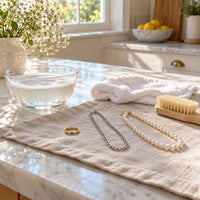
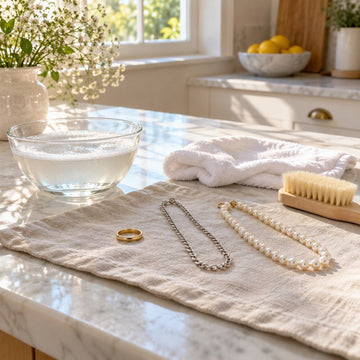
- a bowl and warm water;
- a mild dishwashing liquid, without perfume or strong coloring;
- a very soft toothbrush;
- two soft cloths, one for drying, the other for polishing.
The step-by-step steps
- Fill a bowl with warm water and add a few drops of mild dishwashing liquid.
- Let the jewelry soak for five to ten minutes to loosen greasy deposits.
- Brush gently, in the crevices, with a very soft toothbrush.
- Rinse with clear warm water, without leaving soap.
- Dry immediately with a soft and dry cloth, then leave in the air for a few minutes.
The polishing cloth to finish
A polishing cloth for silver restores shine without liquid product. It is used on a piece of jewelry that is already clean or only tarnished, rubbing in one direction, without pressing.
Fold it to expose a clean side with each pass: the gray side keeps the removed black layer and otherwise redeposits it.
How often to clean?
One pass of a cloth after each wear is enough for everyday jewelry. A cleaning with soapy water every one to two months, or as soon as the shine fades, maintains the silver without tiring it.
Always dry the jewelry immediately: damp silver tarnishes faster, and a drop of water sometimes leaves a halo.
Method 2: baking soda and aluminum foil for tarnished silver

This is the most cited recipe for cleaning tarnished silver jewelry. It does not scratch: the aluminum foil and baking soda cause a reaction that makes the sulfur move from the silver to the aluminum.
The detailed recipe
- Line a heat-resistant bowl with aluminum foil, shiny side up.
- Place the jewelry on top, in contact with the foil, without them overlapping.
- Add one to two tablespoons of baking soda.
- Pour very hot water, just enough to cover the jewelry.
- Wait five to ten minutes: the black layer disappears, a slight egg smell is normal.
- Rinse, dry and polish with a soft cloth.
Why this method works, and its limits
It acts on the entire surface, even in the links of a chain, without a rough gesture. It can, however, strongly lighten a deliberately patinated piece, whose dark crevices make the design.
A variant: the baking soda paste
For a small piece or a specific area, mix baking soda and a little water into a thick paste. Apply it with your finger or with a very soft brush, let it work for a minute, then rinse.
Avoid rubbing hard: baking soda is slightly abrasive. It is better to repeat the operation than to press.
The other tips: lemon, white vinegar, polishing cloth or toothpaste?

Google offers dozens of recipes for cleaning silver jewelry at home. Here is what you should remember, and what is better to avoid so as not to scratch the metal.
White vinegar and baking soda: a brief bath
White vinegar dissolves part of the black layer. A bath of a few minutes in a warm mixture of water and vinegar, followed by a careful rinse, lightens a solid piece. Never let it soak for long: the acid also attacks the solder and the stones.
Lemon and salt: reserved for small pieces
Lemon juice or coarse salt act as a light stripper. They lighten, but remain acidic or abrasive: rinse immediately, avoid stones and reserve these steps for solid pieces.
Toothpaste, bleach, soda: why avoid them
Toothpaste contains abrasive grains that leave fine scratches, visible especially on a polished piece. Bleach and corrosive household products attack the metal and damage certain stones. An acidic soda drink is no better than a vinegar bath, with sugar on top.
| Method | Effectiveness on tarnished silver | Precaution |
|---|---|---|
| Soapy water and cloth | Low to medium | None, the safest |
| Baking soda and aluminum foil | Strong | Hot water, away from porous stones |
| Diluted white vinegar | Medium | Short bath, rinse well |
| Lemon or coarse salt | Medium | Solid pieces only |
| Toothpaste | Medium, but scratches | Avoid |
| Bleach, household products | Attack the metal | Prohibited |
Ultrasonic machine and commercial product
An ultrasonic cleaner or silver cleaning bath is also available. They are suitable for solid silver without fragile stones. Follow the product instructions and rinse with clean water, even for so-called “frictionless” models.
Stones, pearls, plated and rhodium-plated: adapt the method

Many searches associate silver with stones: “with stones,” “and pearl,” “and amber.” This makes sense, as a set ring is not treated like a plain chain.
Jewelry with pearls or amber
Pearls and amber are organic materials, sensitive to prolonged exposure to water, acids and alcohol. Run a barely damp cloth over the metal part, avoiding the stone, then wipe dry.
Jewelry with turquoise, opal or porous stones
These stones absorb water and products, and can become dull or crack. A dry and very soft brush, a soft cloth, then storing them separately: that is all they need.
Jewelry with zircon or small crystals
A well-set zircon can withstand a bath of warm soapy water and a soft brush. Dry thoroughly under the stone: water left in the setting tarnishes the metal and can dull the underside of the stone.
An antique or deliberately patinated piece
Some jewelry uses dark recesses to define the pattern: that is the intended patina. A bicarbonate bath would make it disappear instantly. In this case, polish only the raised parts with a cloth.
A family heirloom or valuable piece deserves the opinion of a jeweler before any vigorous method.
Silver-plated and rhodium-plated silver
On a plated piece, repeated rubbing wears down the thin deposited layer. On a rhodium-plated piece, it is the protection that wears down. In both cases, warm water, mild soap, cloth: nothing else.
Store silver so it no longer tarnishes

Cleaning is good. Preventing the return of the tarnish is better. Storage plays the main role: the less silver sees air and moisture, the longer it stays bright.
The dry piece, the closed box
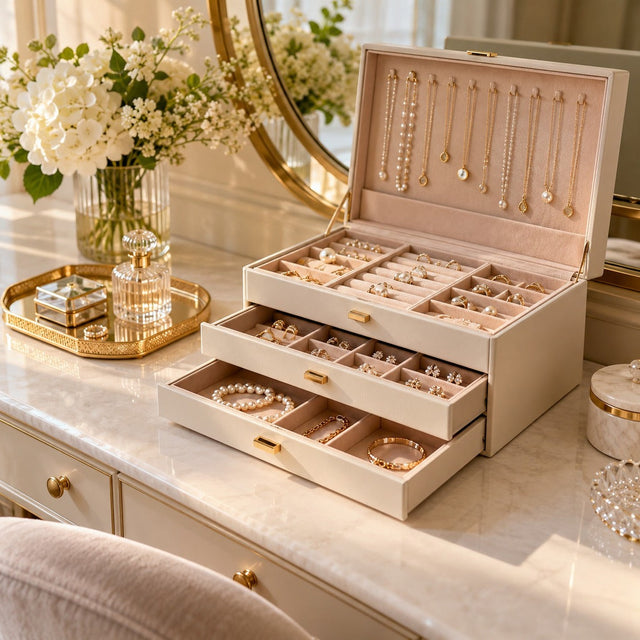
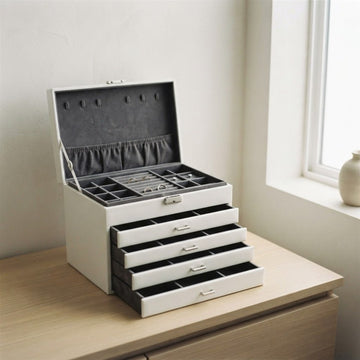
Before storing, dry the piece with a soft cloth and let it cool. A closed jewelry box limits contact with the ambient air, and its compartments prevent pieces from rubbing against each other and getting scratched.

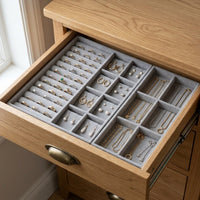
One compartment per piece
- Separate the pieces: two touching pieces of jewelry will scratch and tarnish in places.
- Close the chains to prevent knots and creases.
- Isolate pearls and soft stones in their own compartment.
- Add a silica packet or a small piece of chalk to absorb moisture.
A simple routine every month
- Take the jewelry out of the box and check those that have changed color.
- Run the polishing cloth over simply dull pieces.
- Clean those that require it with soapy water, then dry.
- Air out the box for a few minutes before putting everything back.
Choose the right box according to the collection
Count your pieces and allow some margin: an overfilled box causes jewelry to touch. For chains, prefer drawers or hooks. For rings, slots or individual cases. For travel, a compact box that closes well.

Where to place the box
Choose a dry place, away from a bathroom, window or kitchen. Avoid contact with paper, cardboard and rubber, which contain sulfur and tarnish silver faster.
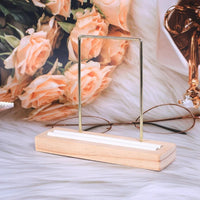
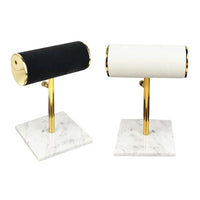
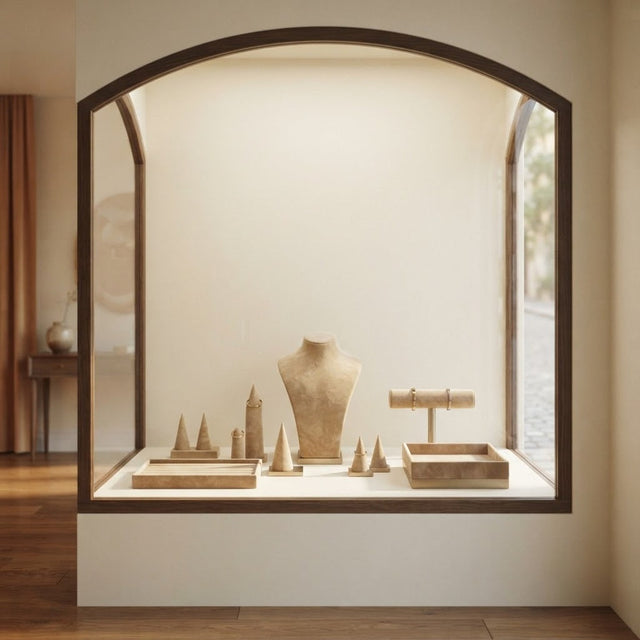
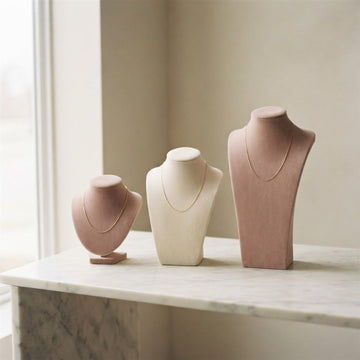
To learn more, see our guides jewelry boxes: properly store and protect your pieces and maintain and clean your jewelry displays.
The models are found in the jewelry boxes, jewelry cases and jewelry cases collections.
Our favorites for storing silver jewelry
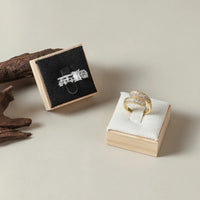
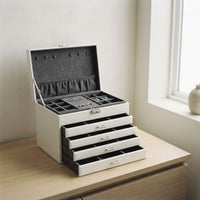
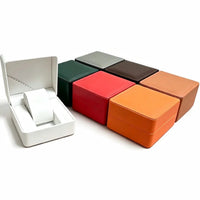
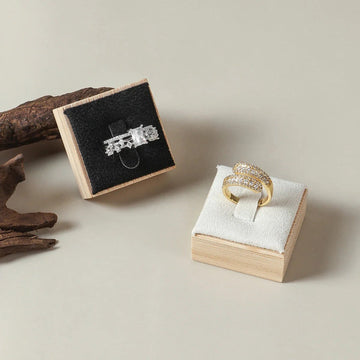
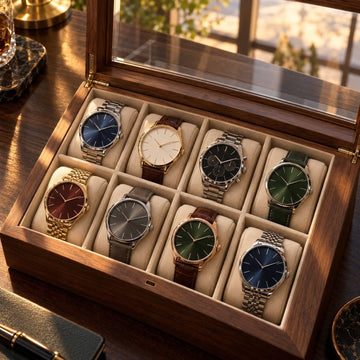
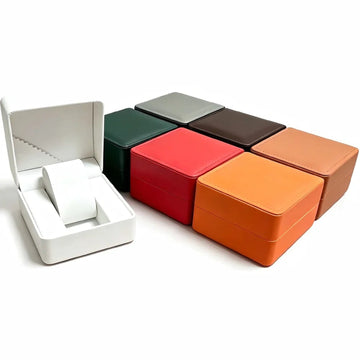
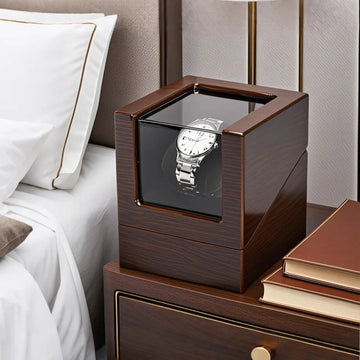
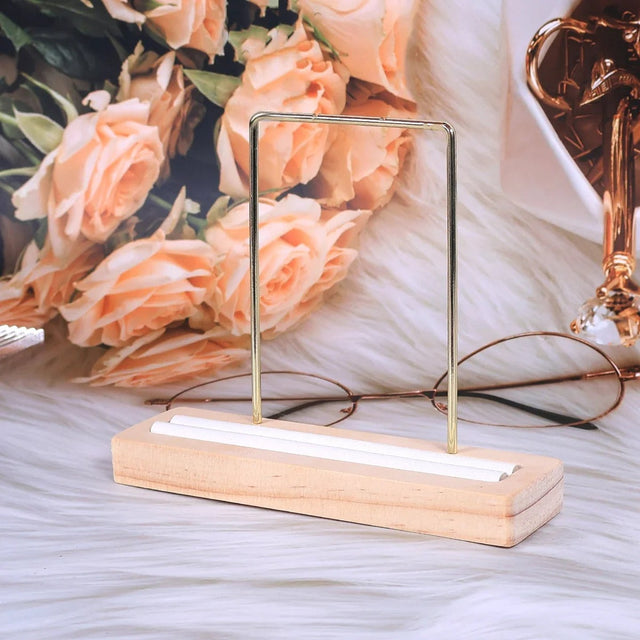
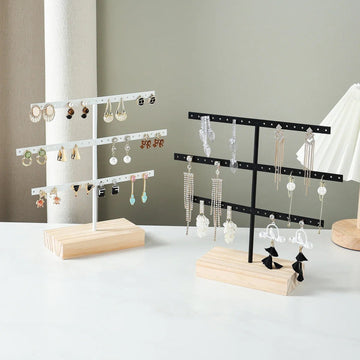
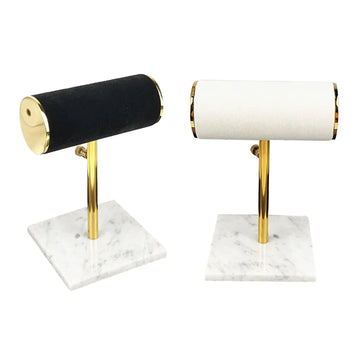
Four models to keep silver clean once cleaned: a drawer box, a pocket case, a wooden box and a round box for rings. Each is chosen according to the number of pieces to store.


To browse the entire range, visit the jewelry boxes or cases collections.
Frequently asked questions about cleaning silver jewelry
How to clean tarnished silver jewelry?
Start with a bath of warm water and mild soap. If they remain black, use bicarbonate, aluminum foil and hot water for five to ten minutes, then rinse and dry.
What product to use for cleaning silver jewelry?
The safest remains mild dish soap diluted in warm water and a cloth. A silver polishing cloth then gives the shine, without liquid product.
Can silver jewelry be cleaned with white vinegar?
Yes, in a short bath in warm water, followed by a careful rinse. Avoid it on pearls, amber and porous stones, which the acid damages.
Is toothpaste a good idea for cleaning silver?
No. It contains abrasive grains that scratch the metal, especially polished. Soapy water and a cloth do better, without risk.
How to clean silver jewelry with stones?
Barely damp cloth on the metal part, very soft brush and immediate drying. Porous stones, pearls and amber are never soaked.
How to clean rhodium-plated or plated silver jewelry?
With warm soapy water and a soft cloth only. Without hard rubbing or abrasive product, which would wear down the thin protective layer.
Should silver be polished before storing?
Yes, a pass of a soft cloth over a clean and dry piece removes the last traces. Then store it without delay, in a closed compartment.
How to prevent silver from tarnishing again?
Store it dry, separate from other jewelry, in a closed box, away from moisture. Put it on after perfume and cream, and take it off before showering.
In summary: cleaning silver jewelry without damaging it

To clean silver jewelry, proceed step by step: soapy water first, bicarbonate and aluminum foil if the tarnish resists, the cloth alone for fragile stones.
- Gentle first: warm water, soap, cloth.
- Tarnished: bicarbonate, aluminum foil, hot water.
- Fragile: pearls and amber dry only.
- Forbidden: toothpaste, bleach, hard rubbing.
- Storage: closed box, one compartment per piece.
Above all, remember this: tarnished silver is not damaged. A few regular gestures, a soft cloth and a suitable box restore its shine, and keep it.
To store your clean pieces, continue in the jewelry boxes, jewelry cases and jewelry cases collections.
Frequent searches: clean silver jewelry, how to clean silver jewelry, clean tarnished silver jewelry, clean silver jewelry with aluminum foil, clean silver jewelry with bicarbonate, clean silver jewelry with vinegar, clean silver jewelry with toothpaste, clean silver jewelry naturally, clean oxidized silver jewelry, product to clean silver jewelry, clean silver ring with stone, clean 925 silver jewelry.
Get our next articles
Tips, guides and new arrivals, straight to your inbox.