






























Why my jewelry turns green: causes, cleaning and proper storage
The question "why do my jewelry pieces turn green?" comes up very often, and the answer can be summed up in a few words: the base metal reacts with the skin, moisture, or air. The good news is that it can be prevented and cleaned.
This guide explains the causes, the materials involved, what to do with a piece of jewelry that has already turned green, the steps that delay the phenomenon, and how to store your pieces to protect them.
Why my jewelry turns green: the cause in three words

A green piece of jewelry is almost never "bad": it is simply a metal that reacts. The usual culprit is copper, which oxidizes when it comes into contact with water, air, and the salts in sweat.
Reacting copper
Copper and its alloys, such as brass and bronze, form a colored layer when exposed to air: brown at first, then green. This is the same patina found on copper roofs. On jewelry, it appears much more quickly because the skin is warm, moist, and slightly acidic.
Worn-out plating
Many fashion jewelry pieces are made of a base metal covered with a thin layer of gold, silver, or another metal. As long as this layer holds, nothing happens. But rubbing, bathing, and products wear it down, exposing the metal underneath to the skin.
Green jewelry or green skin: the same origin
When the skin turns green under a ring or bracelet, it is the same reaction: copper salts form on the jewelry and then deposit on the skin. The mark disappears when washed, but it returns as long as the jewelry is not cleaned or replaced.
Why it happens especially in summer
When it is hot, we sweat more and the skin remains moist for longer under the ring or bracelet. Moisture and heat accelerate the reaction: a piece of jewelry that lasts all winter can turn green in just a few days of heatwave.
Why it depends on the person
Everyone's sweat has a different composition, and skin pH varies. Two people wearing the same piece of jewelry may therefore experience very different results: one may notice nothing, while the other sees a green mark within a week.
The first signs of jewelry that is about to turn green
- A brownish tint on the edges or near the clasp.
- The golden color fading at points of contact with the skin.
- A slight greenish deposit in crevices, links, or prongs.
- Slightly discolored skin after a day of wear.
At these first signs, gentle cleaning and storing in a dry place can prevent the layer from becoming further damaged.
Materials that turn green, black, or dull

Not all materials react in the same way. This table provides some guidelines, without replacing the composition indicated on the product page for each piece of jewelry.
| Material | Common reaction | Explanation |
|---|---|---|
| Copper, brass, bronze | Green, sometimes brown | Copper oxidizes when it comes into contact with sweat and moisture |
| Plated jewelry (thin layer) | Green once the layer is worn out | The base metal is exposed beneath the plating |
| Silver | Turns black or dull | Sulfur from the air and certain foods forms a dark layer |
| Stainless steel | Generally resists well | It does not contain a significant proportion of copper |
| High-karat gold | Generally stable | The metal does not oxidize easily |
Why silver turns black instead of green
Silver reacts mainly with sulfur. It then develops a gray, then black patina. A soft cloth or appropriate cleaning removes it. The article on cleaning silver jewelry details the methods.
Why two "gold-tone" pieces of jewelry do not behave the same way
Two pieces of jewelry of the same color may have very different compositions: solid metal on one hand, thin plating on the other. You cannot tell by looking, but use quickly reveals the difference.
What the color of the mark tells you
| What you see | Probable origin |
|---|---|
| Green mark on the skin | Copper: brass, bronze, or worn-out plating |
| Blackened or grayed silver jewelry | Sulfur from the air or certain products |
| Gray or black mark on the skin | Fine metal particles or tarnished silver rubbing against the skin |
| Brown or orange marks on the jewelry | Early copper oxidation, or light rust on ferrous metal |
These guidelines help you choose the right cleaning method: what works for verdigris is not always suitable for blackened silver.
Sweat, perfume, water: what accelerates the process

Metal does not turn green at the same rate for everyone. Several factors accelerate the reaction.
- Sweat: warm and slightly acidic, it attacks metal more quickly, especially in summer or during exercise.
- Water: showering, washing dishes, swimming in a pool or the sea leave residues that oxidize the metal.
- Perfumes, creams, hairsprays: when applied to jewelry that is already on, they become embedded in the surface.
- Household products: highly aggressive, they wear out plating in just a few uses.
- Damp storage: jewelry stored while wet turns green without even being worn.
The role of rubbing
Rings and bracelets rub constantly against the skin and clothing. This rubbing wears out plating more quickly than on a necklace or earrings, which is why rings are often the first to turn green.
Everyday products to watch out for
- Shower gel, soap, and shampoo: they leave a film that holds moisture against the metal.
- Alcohol-based hand sanitizer: it can dull certain surfaces.
- Sunscreen and oils: they become embedded in the crevices of the jewelry.
- Chlorinated water: very aggressive to plating and sensitive metals.
Is green skin dangerous?

A green mark on the skin is usually harmless: it does not indicate an illness or poisoning. It is the color of copper salts, which can be washed off with water and soap.
Green mark or allergy: two different things
A green mark is a visible deposit. An allergy is a skin reaction: redness, itching, small bumps. One can occur without the other. The metal in some jewelry, especially nickel, sometimes causes an allergy without the skin turning green.
When to remove the jewelry and seek advice
If the skin becomes red, itchy, or swollen under the jewelry, remove it and wash the area. If the discomfort persists, ask a doctor or pharmacist for advice. A piece of jewelry that leaves a green mark without any other discomfort can be cleaned or simply replaced.
How to choose jewelry that marks the skin less
Look at the composition indicated on the product page: a metal without visible copper, such as stainless steel or high-karat gold, generally marks the skin less. For sensitive skin, ask a healthcare professional for advice before choosing a metal to wear.
What to do with jewelry that has already turned green: clean it

A piece of jewelry that has turned slightly green can often be cleaned without any special product. Here is the gentlest method, to try before any other.
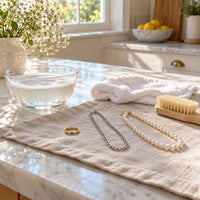
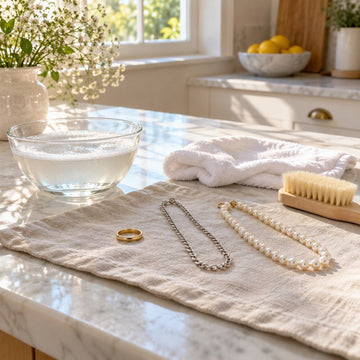
- Soak the jewelry for a few minutes in warm water with a drop of mild soap.
- Brush the green areas gently with a very soft brush.
- Rinse under clear water to remove all traces of soap and deposits.
- Dry completely with a soft cloth: damp jewelry quickly turns green again.
Why you should not rub hard
On plated jewelry, rubbing too hard removes the decorative layer along with the green. It is better to start over twice, gently, than to rub hard once.
What cannot be cleaned
Plating that has worn down to the metal cannot regain its layer: cleaning removes the green mark, but not the worn area. The jewelry will turn green again more quickly. A jeweler can sometimes offer re-plating; for a small piece of fashion jewelry, replacing it is often easier.
If the green is thick or embedded
When verdigris is old, a single cleaning is not always enough. Repeat the soaking and gentle brushing several times, allowing it to dry between treatments. Do not use abrasives or stripping products: they scratch the surface and leave the jewelry more vulnerable.
Drying: use a cloth, not a radiator
Dry the jewelry with a soft cloth and leave it to air dry for a few minutes. Avoid a radiator or hair dryer: the heat can damage the adhesives, stones, and finishes of some fashion jewelry.
The best ways to prevent jewelry from turning green

No single action can make costume jewelry last forever, but a few habits will make it last much longer.
- Jewelry last: put it on after perfume, cream, and hairspray, once they have dried.
- Remove jewelry before water: showering, washing dishes, swimming, the sea, and the sauna.
- Remove jewelry before exercise: sweat is the main culprit.
- Wipe it with a soft cloth after each wear: this removes sweat and deposits before they can cause damage.
- One piece at a time: alternating between several pieces limits wear on each one.
What to do on vacation
Heat, sunscreen, seawater, and swimming pools combine to create the perfect storm. Leave delicate jewelry at home, take just one or two simple pieces, and store them in a dry pouch each evening rather than in a beach bag.
Clear nail polish on the ring: a tip to know
Some people apply a very thin layer of clear nail polish to the inside of a ring to limit contact between the metal and the skin. The trick delays the green mark, but it wears off and needs to be reapplied. It is not a substitute for a suitable metal.
Choosing the right metal for everyday wear
For a ring or bracelet worn every day, choose a metal that holds up well, such as stainless steel or high-karat gold. Save gold plating for jewelry worn occasionally.
Store jewelry to delay oxidation

Jewelry doesn't just oxidize when you wear it. Storage matters just as much: moisture, air, and friction between pieces cause tarnishing and verdigris.
- Dry it first: never store jewelry wet or damp.
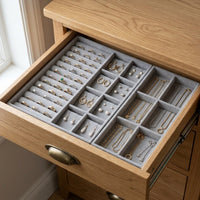
- One compartment per piece: avoid loose jewelry rubbing together.
- Closed box: the lid reduces contact with the air and dust.
- Away from the bathroom: steam can penetrate everywhere.
- Soft linings: velvet, felt, microfiber, or padding protect surfaces.

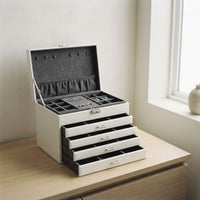
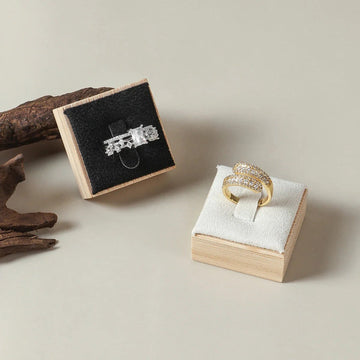
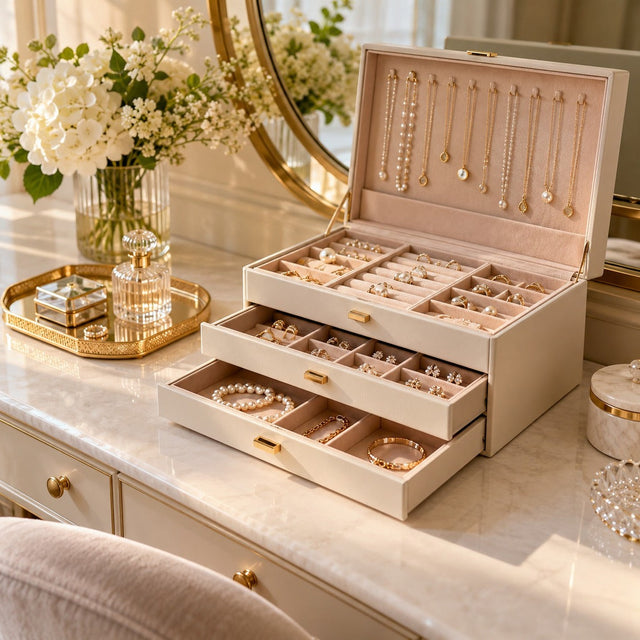
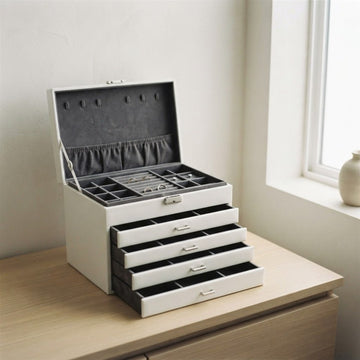
Closed cases protect each piece of jewelry from contact with the air and other pieces.

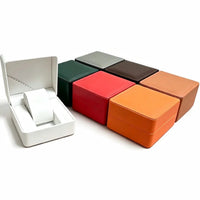
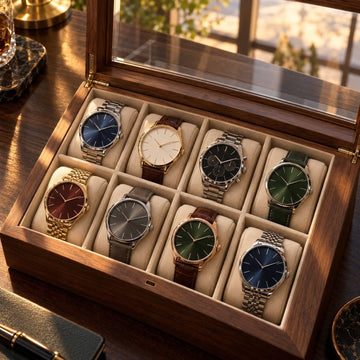
A glass window lets you see the rings without opening the box or handling them.
Moisture-absorbing packets
Many people place a small silica gel packet in a closed box to absorb moisture. The trick is simple and inexpensive: replace it or let it dry regularly, according to the instructions on the packet.
Separate storage for silver
Silver tarnishes when exposed to air and sulfur. Store it in a closed pouch or enclosed compartment, separate from other metals, and take it out occasionally to wear it: jewelry that is worn often stays shinier than jewelry that is forgotten.
Compartment box, pouch, or display: which should you choose
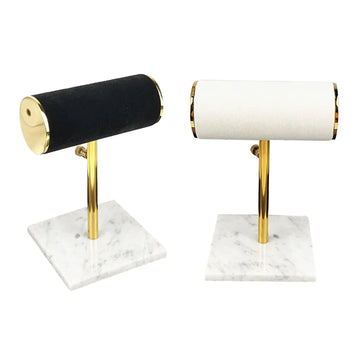
For everyday use, a compartment box prevents pieces from touching. For travel, individual pouches or a travel case protect each piece of jewelry. For display, a stand lets pieces breathe while keeping them away from moisture.

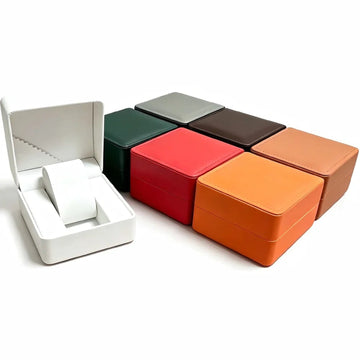
For travel, flat pouches separate bracelets and necklaces.

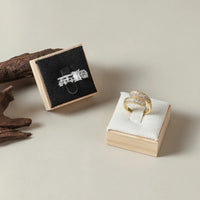
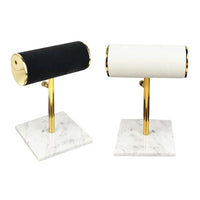
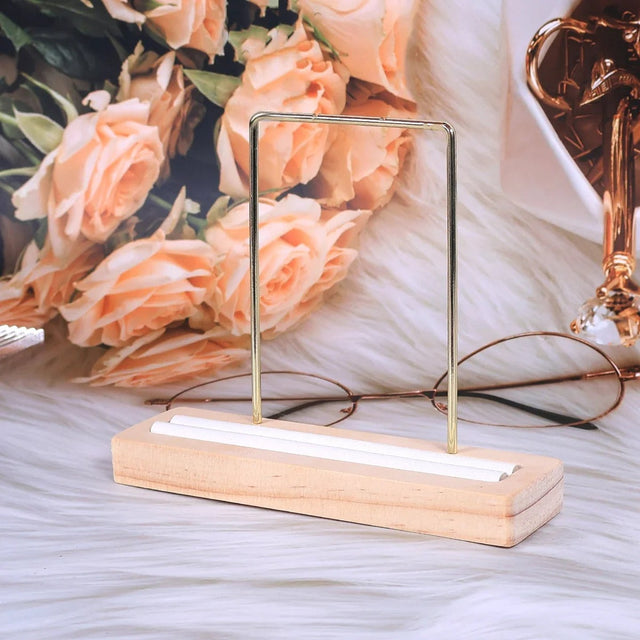
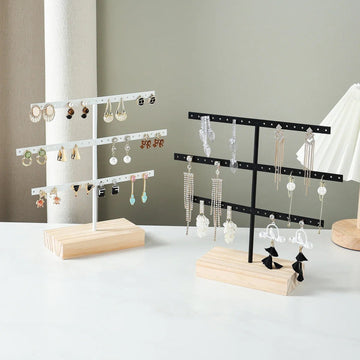
A tiered display stand keeps jewelry separate and exposed to the air, away from the moisture in drawers.
Discover our jewelry boxes and our jewelry storage solutions. For more information, read how to store jewelry in a drawer without damaging it and jewelry boxes: how to properly store and protect your pieces.
Our favorites for better jewelry storage


To see everything, visit the jewelry boxes collection or the jewelry storage section.
Frequently asked questions: green, black, and tarnished jewelry
Why is my jewelry turning green when it's new?
Often because the base metal contains copper. When exposed to sweat, moisture, or a cosmetic product, the copper oxidizes and forms a green layer, verdigris.
Why does jewelry leave a green mark on the skin?
The mark comes from the same reaction: copper salts form on the jewelry and deposit on the skin. It is not a sign that you are ill, only that the metal is reacting.
Is jewelry that turns green dangerous?
A green mark is generally harmless. In case of redness, itching, or persistent discomfort, remove the jewelry and seek advice from a healthcare professional.
How to remove green from jewelry?
Soak it in warm soapy water, brush gently with a very soft brush, rinse, and dry completely. For costume jewelry, avoid harsh products that damage the surface.
Can you prevent jewelry from turning green?
You can delay it: remove jewelry before showering, swimming, and exercising, put it on after perfume and cream, wipe it after wearing, and store it in a dry place, separate from other pieces.
Why is my jewelry turning black?
On silver, blackening is mainly due to contact with sulfur present in the air and in certain foods, products, or textiles. It can be removed with appropriate cleaning.
Is gold-plated jewelry ruined if it turns green?
Not necessarily: if only the surface is tarnished, gentle cleaning is enough. If the plating is worn and the metal underneath is visible, only a jeweler can offer replating.
Where to store jewelry so it doesn't turn green?
In a dry place, away from direct light, with one compartment per piece of jewelry. A closed box, compartments, or pouches prevent friction and reduce contact with the air.
In summary: keep jewelry clean and shiny

If you were wondering why your jewelry is turning green, remember the main cause: a copper-based metal that oxidizes when exposed to the skin and moisture.
- Cause: copper, worn plating, sweat, water, and cosmetic products.
- Cleaning: warm soapy water, soft brush, complete drying.
- Prevention: jewelry last, removed before water and exercise.
- Storage: in a dry place, closed, one compartment per piece.
Continue with the jewelry boxes collection, or discover jewelry storage idea: 10 solutions depending on the space you have.
Popular searches: why is my jewelry turning green, my jewelry is turning green, why is my jewelry turning black, why is my jewelry turning pink, jewelry that leaves green marks, verdigris on jewelry, cleaning oxidized jewelry, how to prevent jewelry from tarnishing.
Get our next articles
Tips, guides and new arrivals, straight to your inbox.