








































How many winds to wind an automatic watch? Reliable tips and techniques
How many turns to wind an automatic watch? Most often, 20 to 40 turns of the crown are enough to restart a stopped watch, but the exact number depends on the caliber and the condition of the mainspring.
This guide provides benchmarks for different situations, explains how to feel when the mainspring is fully wound, details the power reserve, and then the setting of a watch winder. For the complete time-setting process, another blog post details it step by step.
How many turns to wind an automatic watch: the short answer

For an automatic watch that has been stopped for several days, allow 20 to 40 turns of the crown. This is a common benchmark, not an absolute rule: some calibers require slightly less, others slightly more.
Why the number of turns varies from one watch to another
The mainspring does not have the same length or strength on all calibers, and the crown is geared differently. Two similar watches can therefore require 25 or 40 turns.
This is why there is no single number. Remember the range and rely above all on the feeling of resistance.
What to do when the manual does not give any number
Look for the caliber reference on the back of the watch or in its documentation, then proceed with small, regular turns. After about 20 turns, the crown begins to stiffen on many models; beyond that, stay attentive.
A simple benchmark to keep in mind
If you only have to remember one number, remember about thirty turns. It is the middle of the range, the value around which many watches are filled. Start there, then adjust with the feel of the crown.
How many turns depending on the watch's condition

The right number of turns depends on the amount of energy remaining in the mainspring. Here are benchmarks to adapt to your caliber.
| Situation | Crown turns (benchmark) | To remember |
|---|---|---|
| Watch stopped for several days | 20 to 40 | Fill the mainspring until resistance |
| Left for a day or a night | A few turns, 5 to 10 for example | Simple supplement before wearing it |
| Worn every day | None, or a few turns upon waking | The rotor takes care of winding |
| Manual winding watch | Often 20 to 40, every day | Daily gesture, at a fixed time |
| Watch on a winder | None by hand | Set in turns per day (see below) |
Stopped watch: how many turns to restart it
Unscrew the crown if it is screwed, leave it in the pushed position and turn it clockwise. Count 20 to 40 turns, then set the time. Then wear the watch: the rotor completes the filling.
Watch worn every day: should you still turn the crown
In principle, no. A day of wear with normal gestures winds the mainspring. A small supplement with the crown is only useful if the watch has remained set down and risks starting with little reserve.
Manual winding watch: the morning ritual
A purely manual watch has no rotor. We wind it every day, at about the same time, about 20 to 40 turns depending on the caliber. Regularity counts more than effort: it is better to have a calm winding every morning than long sessions spaced out.
Morning or evening: which time to choose
Morning is the most practical: the watch is full for the day, then the rotor takes over on the wrist. Evening is suitable for a manual watch if you like an end-of-day ritual. The essential thing is to keep the same habit, so that the reserve never drops to zero at the time of wearing it.

Some owners of several watches choose a rotating support placed on the bedside table, like this one, to no longer count the turns by hand.
How to feel when the mainspring is fully wound

The best counter remains touch. More than the exact number of turns, it is the change in sensation that indicates the right time to stop.
- Unscrew the crown if it is screwed, until it releases.
- Leave it in the pushed position, without pulling it out one click.
- Turn clockwise, with the tip of the thumb and index finger.
- Keep a regular pace, without jerks, counting aloud if you wish.
- Stop at resistance: the crown becomes clearly firmer.
- Screw the crown back without tightening hard, then set the time.
What we feel at the end of the course
The first turns turn freely. Then the crown offers a regular resistance, slightly harder with each turn. When it almost no longer turns, the mainspring is full.
Should you really count the turns
Counting helps to identify the number specific to your watch, but does not replace touch. If your count announces 40 turns and the crown stiffens at 30, believe the crown.
Three signs that the mainspring is full
- The crown stiffens clearly, turn after turn.
- It almost no longer turns without marked effort.
- The sensation becomes uniform: no more free first turns, everything is firm.
If the crown catches or squeaks
A crown that catches, squeaks, or jumps is not normal. Stop, do not force, and have the watch checked by a watchmaker. A grain of dust in the thread or a worn mechanism is fixed much more easily when you have not insisted.
Winding without damaging: direction, pace and screwed crown

Winding is a simple gesture, but a few habits preserve the movement in the long term.
In which direction to turn the crown
Clockwise winds the mainspring. In the other direction, the crown most often turns empty: it is not dangerous, but it does not wind anything and wastes time.
Screwed crown: unscrew before, screw back after
Many waterproof watches have a screwed crown. Unscrew it by turning it towards you until it releases, wind, then screw it back without tightening hard. A crown screwed back crookedly damages the thread and the sealing.
Automatic watch without manual winding
Some automatic watches are not wound by the crown: it is only used to set the time. In this case, only wear or a winder winds the mainspring. If the crown turns without any resistance, check the manual before insisting.
- No jerks: a regular speed, like turning a small key.
- No winding by pulling: the crown remains in the pushed position.
- No date change during winding: it is another gesture, to be done outside the night range indicated in the manual.
Power reserve: how many hours after winding

The power reserve is the duration during which the watch works alone after a full winding. Many automatic watches last 40 to 48 hours, some calibers significantly more.
| Time elapsed since a full winding | What happens on a standard reserve |
|---|---|
| A few hours | The watch is near its full reserve |
| One day | Roughly half the reserve remains |
| Two days | The reserve is coming to an end |
| More than two days | The watch generally stops |
Why a full watch does not last indefinitely
The mainspring releases its energy little by little. When it approaches the end, the watch can lose precision before stopping. Regular winding keeps the movement more stable.
My watch stops earlier than expected
First reflex: check that it has been wound until resistance and not just a few turns. If it still stops well before the announced reserve, the movement deserves a check by a watchmaker: aged oil or wear can reduce the duration of operation.
Watch winder: how many turns per day to set

A watch winder does not count crown turns: it rotates the watch to mimic wearing it on the wrist. It is set in turns per day, often abbreviated TPD.
Movements most often require between 600 and 1,000 turns per day. The watch manual provides the exact value, which you must then find in the winder settings.
Rotation modes: clockwise, counterclockwise, alternating
| Mode | For which case |
|---|---|
| Clockwise | Watch whose rotor winds in one direction, clockwise |
| Counterclockwise | Watch whose rotor winds in the opposite direction |
| Alternating | Bidirectional rotor watch, which winds in both directions |
The useful direction depends on the movement: the watch manual indicates it. The wrong direction will not damage it, but winding will be less effective.
Why the winder takes breaks
Continuous rotation is not necessary: the winder rotates in cycles, with stop times, to reach the desired number of turns without overloading the movement. This also limits noise and wear.
Should you wind it by hand before putting the watch away
A stopped watch starts better with a few crown turns before joining the winder: it starts off on the right foot. Then, the winder maintains the spring level day after day.
Three questions before setting a winder
- How many turns per day does my watch movement require?
- In which direction does its rotor wind the spring?
- How many automatic watches will I be rotating at the same time?
Once these three answers are noted, the setting takes a minute and no longer needs to be changed.

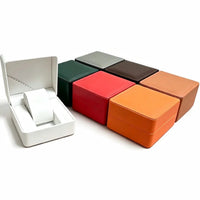
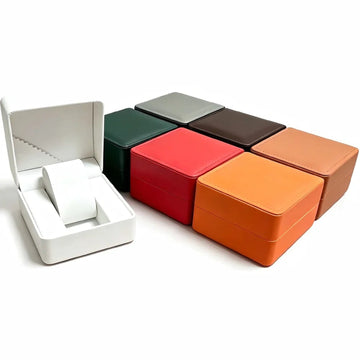
This type of box combines winding slots and simple storage slots.

A wooden winder sits in a bedroom or office like a decorative object.
Tip: before choosing a winder, count your automatic watches and look, on the product page, at the proposed rotation modes. Those in the automatic watch winder collection stand out for their material and number of slots.
To compare the models in detail, also read automatic watch winder: how to choose it properly.
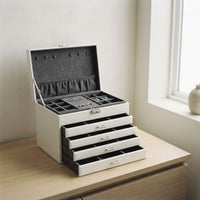
Storing your watch between wears

A watch that is not worn needs a clean, stable and dry place. Good storage also prevents scratches and shocks.
- Safe from dust: a closed box or a glass-lidded case.
- Away from magnets: speakers, magnetic closures or phones can disrupt a movement.
- Away from heat and humidity: no windowsill in the sun, no bathroom.
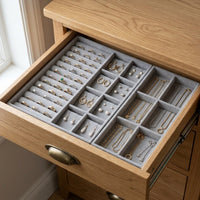
- On a cushion: the strap or case does not rub against another object.
Box, cushion or winder: which one for which habit
If you alternate two or three watches, a box with cushions is enough: you wind it by hand when you pick one up again. If you keep several ready to wear, a winder prevents having to reset the time every time.
Where to place the box in the house
A dresser drawer, a closet shelf or a corner of a desk are suitable. Avoid the top of a radiator, the vicinity of a speaker or a windowsill in full sun: heat and magnets do not mix well with a movement.
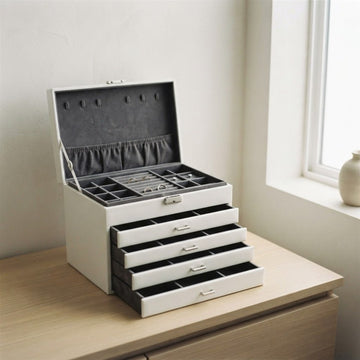
Watch boxes and watch safes with winders meet these two uses. To choose properly, read watch box: how to choose it according to your collection.
Our favorites for keeping your watches ready


To see everything, go to the automatic watch winder collection or the watch boxes.
Frequently asked questions: how many turns to wind your watch
How many turns are needed to wind a stopped automatic watch?
Generally 20 to 40 crown turns, clockwise, until feeling resistance. The exact number varies depending on the movement: the watch manual is the reference.
How many turns to wind a manual mechanical watch?
Often 20 to 40 turns too, every day at a fixed time. A manual watch has no rotor: all its spring is wound by the crown, so the daily gesture is part of its use.
Can you overwind an automatic watch?
Modern movements are designed so that a full spring is not forced. Despite this, you must stop at the first clear resistance and never insist.
Should you wind an automatic watch every day?
No, if you wear it regularly: the rotor takes care of it. A few turns upon waking up only give a good start if it remained placed the day before.
In which direction to turn the crown to wind?
Clockwise, as indicated by most manuals. In the other direction, the crown turns freely on most watches: if yours remains without effect, reread the manual.
How many turns per day for an automatic watch winder?
Movements often require between 600 and 1,000 turns per day. The watch manual gives the exact value, and the winder is then set accordingly.
How long does an automatic watch last after winding?
A power reserve of 40 to 48 hours is common, some movements go beyond. A half-wound watch naturally stops earlier.
Why does my automatic watch stop even after winding?
Often because the spring was not filled up to resistance. If the problem returns despite a full winding, a watchmaker must check the movement.
In summary: the right number of turns for your watch

To know how many turns to wind an automatic watch, remember a range of 20 to 40 turns and above all the sensation of resistance.
- Gesture: crown pushed, clockwise, regular rhythm.
- Stop: at the first clear resistance, without forcing.
- Reserve: often 40 to 48 hours depending on the movement.
- Winder: 600 to 1,000 turns per day according to the manual.
Continue with the automatic watch winder collection, or read how to wind an automatic watch, with or without a winder for the time-setting gestures.
Frequent searches: how many turns to wind an automatic watch, how many turns to wind a watch, how many turns to wind a mechanical watch, automatic watch winding how many turns, how many crown turns, automatic watch winding direction, turns per day winder.
Get our next articles
Tips, guides and new arrivals, straight to your inbox.