

































How to store an automatic watch when you are not wearing it
Knowing how to store an automatic watch when you're not wearing it helps keep it in good condition and nearly on time, even after several weeks. The movement doesn't need complicated care, just a few simple habits.
This guide explains what happens when a watch is at rest, how to care for it for a few days or several months, the storage options that help (watch case, box, winder), and how to restart it.
How to store an automatic watch: what happens when it's at rest

In an automatic watch, a spring provides the power. When worn, a rotor winds it. When placed on a surface, the watch runs on its power reserve, then stops when the spring has unwound.
A stopped watch is not a damaged watch
Stopping does not cause any wear. Simply wind it to get it running again. The only thing to watch is how long it stays stopped: the lubricants in a movement age over time, whether it's running or not.
What to protect while it's at rest
- The case and crystal: protect against scratches by keeping it in a separate compartment.
- The strap: protect against moisture and heat.
- The movement: protect against magnets and impacts.
Automatic, manual, or quartz: three different ways to store them
A manual watch also stops when it's no longer wound, but it doesn't need a rotor. A quartz watch stops when its battery runs out: a depleted battery left in the case can leak and damage the movement, so it's best to replace it.
For winding, see our guide on how to wind an automatic watch, with or without a winder.
Storing an automatic watch for a few days

For a weekend or a week, the watch doesn't need anything. Place it in a clean spot, flat, and let it stop if it needs to.
| Time without wearing | What happens | Recommended action |
|---|---|---|
| 1 to 2 days | It's still running on its reserve | Wear it as is |
| 3 to 7 days | It has stopped | Wind it by hand, then set the time |
| Several weeks | Prolonged stop | Wind it, set it, and wear it for a day |
Should you wind it before putting it away?
No, not necessarily. Winding it before storing it won't hurt, but it won't make a difference: it will still stop once its power reserve runs out.
What if you want it to show the correct time when you return?
Wind the watch, then set the time and date. For a perpetual calendar or complicated watch, read the instructions first: some functions must be set in a specific order and should never be forced.
How should you place it?
Flat, dial up, or on a cushion. Avoid leaving it standing on its crown: the weight puts pressure on the stem, and accuracy varies depending on the position.
Storing an automatic watch for several months: step by step

If the watch will not be worn for several months, follow this method. It takes ten minutes.
- Wipe the watch with a soft, dry cloth, including the strap.
- Check the crown: make sure it is screwed in or pushed all the way in.
- Close the strap clasp so it keeps its shape.
- Place the watch flat on a cushion in a watch case or box.
- Place the container in a closed, dry, shaded piece of furniture.
- Add a moisture-absorbing packet if the room is damp.
- Note the date of the next check in a calendar.

Where to place the container
Choose a piece of furniture that is not exposed to sunlight or vibrations: a wardrobe, a dressing room, or a chest of drawers away from a radiator. Avoid placing it on top of a refrigerator, oven, or fan heater, as the heat is too intense.
What about a collector's watch?
An antique or valuable piece should be stored in a dedicated box, on its own clean cushion, away from other watches. If you are unsure how to handle it, consult a watchmaker before winding it.
Wound or stopped for long-term storage?
Opinions vary. A stopped watch is unlikely to be damaged in the short term. Winding it occasionally is a common precaution. If in doubt, follow the movement's instructions.
Keeping an automatic watch on time: three habits

An automatic watch keeps time more consistently when its spring is fully wound. As the power reserve decreases, its timekeeping often becomes less regular. Three habits can help.
Wear it regularly for a few hours a day
A few hours of wear a day is often enough to keep the power reserve balanced. This depends on the movement and your activity: a day at the office winds it less than a day spent walking.
Wind it by hand in the morning
A few turns of the crown before putting it on gives it a good start. This is useful if it has been sitting out overnight.
Leave it on a winder between wears
A winder maintains the power reserve and saves you from having to reset the time every time. It is especially useful if you alternate between several watches. The guide on choosing an automatic watch winder explains how to set it up.
What to do if the watch has been forgotten for several days
Nothing serious. Wind it, set the time, and let it run for a day before judging its timekeeping. To help you remember, pair winding it with a morning routine, such as making coffee.
Why it sometimes runs fast or slow
The accuracy of a mechanical watch varies by a few seconds a day. Its resting position, the temperature, impacts and magnetism all affect its timekeeping. Significant inaccuracies mean it's time to visit a watchmaker.
Watch case, box, or winder: which is best for storing your watch

The best storage option depends on how long you'll store it, how many watches you have and how you use them. Three solutions cover almost every situation.
| Storage option | Best for | Limitations |
|---|---|---|
| Watch case or pouch | One watch, travel, a drawer | Protects against light impacts, not moisture |
| Watch box | Several watches, several months | Does not keep the watch running |
| Winder | Alternating automatic watches | Holds only a few watches and runs continuously |

How many watches per storage option?
One compartment per watch, without exception. As your collection grows, move from a watch case to a box, then to a large box or several boxes. Never force a watch into a compartment that is too small.
A watch case for a single watch
A rigid watch case or velvet pouch protects a watch from scratches. It can be stored in a drawer or bag. See our watch cases collection.
A box for several watches
A compartmented box keeps watches separate and protected from dust. It is the most common long-term storage solution: watch boxes.

A winder for everyday watches
A winder is ideal for watches you wear often on a rotating basis: they are always ready. For a watch you wear twice a year, a box is a better choice. See automatic watch winders.
The enemies of a dormant automatic watch

Humidity
It attacks gaskets, leather, and metal. Avoid water features and damp basements. A desiccant packet in the box limits the risk.
Magnets
A speaker, magnetic clasp, or tablet can magnetize the movement and cause it to run inaccurately. Keep the watch a few centimeters away from any source.
Heat and light
Sunlight fades dials, while heat dries out leather. No windowsills, no cars parked in the sun.
Dust and fibers
Dust creeps under the caseback and into the strap. A closed container and a gentle wipe with a dry cloth are enough to keep it away.
Shocks and friction
A watch rolling around in a drawer gets scratched and bumped. A cushion, case, or compartment solves the problem.
Storing an automatic watch according to its strap and case

The movement is the same, but the strap changes everything. It ages faster than the case and reacts to the ambient air.
| Strap | Mainly fears | Storage precaution |
|---|---|---|
| Leather | Humidity, heat, closed plastic | Dry, ventilated place, never in a plastic bag |
| Metal | Friction with other watches | Closed clasp, cushion, separate compartment |
| Rubber, silicone | Heat, greases | Avoid the car in summer and greasy products |
| Fabric | Humidity, dirt | Dry and clean before storing |
The case and glass
A polished case scratches at the slightest friction, while glass scratches less quickly but cracks under impact. Each watch therefore stays in its own compartment, without contact with a neighbor.
The screw-down crown
Many water-resistant watches have a screw-down crown. Screw it back in before storing, without tightening too hard: this keeps the gasket in place and protects the watch from dust.
Storing an automatic watch while traveling or moving

Travel is when a watch is most likely to be bumped and scratched. A few simple steps are enough to avoid unpleasant surprises.

- A hard case or pouch for each watch, never loose.
- Carry-on luggage rather than checked baggage for a watch you value.
- Soft padding (tissue paper, cushion) to prevent it from moving.
- Stop the watch upon arrival: wind it, set the time, and check the crown.
Automatic watches and travel
An automatic watch does not need to run during travel. It may stop, which is not a problem. Upon return, a few turns of the crown will get it running again.
Restarting an automatic watch after long-term storage

When it is time to take it out, follow these three steps. They prevent forcing a movement that has been at rest.
- Inspect the watch: glass, strap, crown, signs of moisture.
- Wind it by hand: crown in the winding position, a few dozen regular turns, without forcing.
- Set the time, then the date, avoiding the period from approximately 9 p.m. to 3 a.m.
Setting the date without forcing anything
Once the watch is running, advance the time past midnight, then set the date. If the date change occurs between approximately 9 p.m. and 3 a.m., wait: the mechanism is then engaged and could be damaged.
If the watch does not restart
After a full winding, a watch that remains stationary deserves a watchmaker's opinion. Never open the back yourself: opening is left to a professional.
If it runs fast or slow
Wear it for a few days, then compare it with a reference time. A significant drift may be due to magnetism: a watchmaker knows how to correct it.
Servicing and monitoring a long-stored automatic watch

Even when properly stored, a mechanical watch ages: lubricants thicken, gaskets harden. Servicing approximately every 5 to 10 years is a common guideline. The manual or the watchmaker provides the exact frequency for your caliber.
- Before a long rest: if the watch has not been serviced for more than ten years, have it checked.
- After a shock: a water resistance check prevents unpleasant surprises.
- At every service: ask that the water resistance check be included.
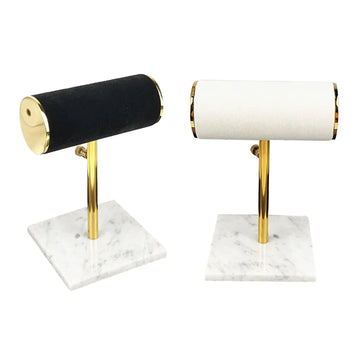
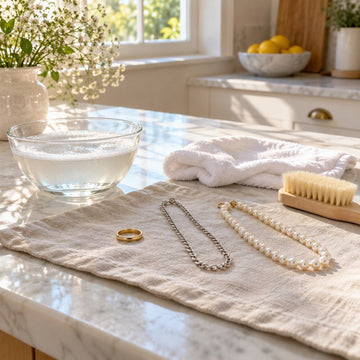
Between services, the maintenance of the container also counts: see maintaining and cleaning your jewelry displays.
Our favorites: cases, boxes, and winders
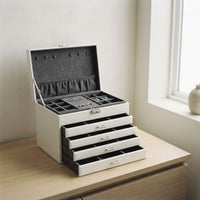
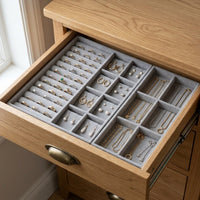
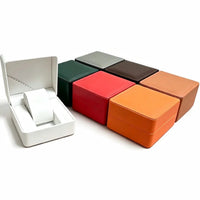
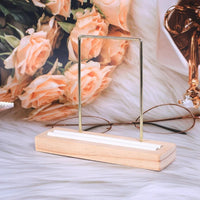
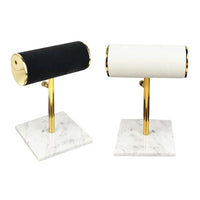
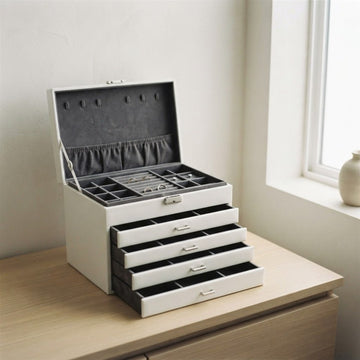
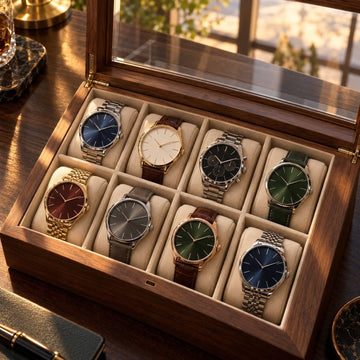
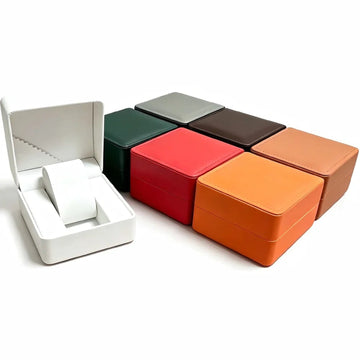
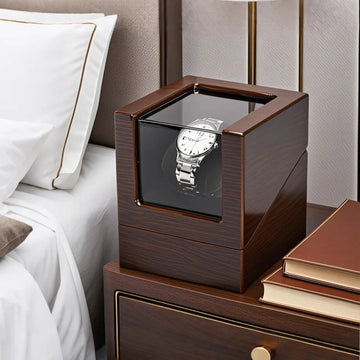
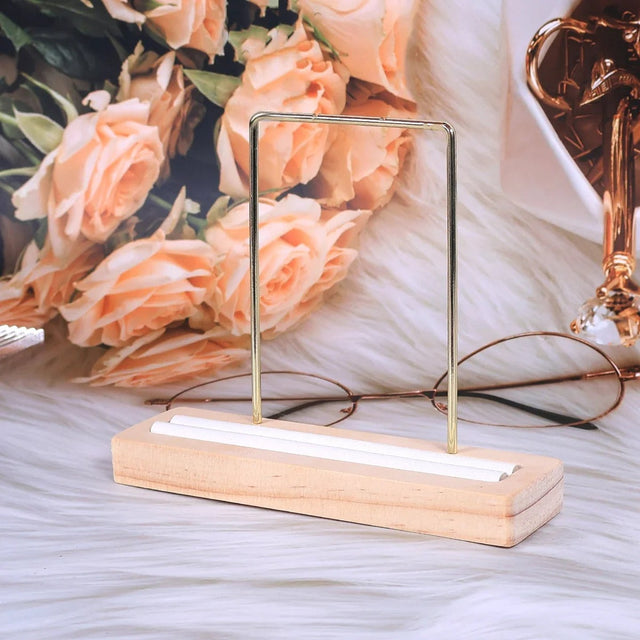
Four products for storing an automatic watch: a case, a box, and two winders.

To see everything: watch cases, watch boxes, and automatic watch winders.
To go further: How long does an automatic watch run without being worn?.
Frequently asked questions: storing an automatic watch
How to store an automatic watch for several months?
Wipe it, screw in the crown, lay it flat in a case or box, and keep it in a dry, shaded place. Run it occasionally, following the manual.
How to store an automatic watch without damaging it?
Each watch in its own compartment, away from humidity, heat, magnets, and shocks. A desiccant packet completes the setup.
Should an automatic watch be left wound or stopped?
Both are acceptable. A stopped watch faces no risk in the short term; running it occasionally keeps the movement going. The caliber manual takes precedence.
How to keep an automatic watch on time?
Wear it regularly, wind it by hand in the morning if it has been left sitting, or leave it on a winder between wears.
Can an automatic watch stay in a drawer?
Yes, in a box or case, never loose. The drawer protects it from light, while the container protects it from friction.
Is a winder needed to store an automatic watch?
No. It is used to keep watches that are worn alternately running. For a watch stored for a long time, a box is enough.
How long can an automatic watch remain stopped?
There is no fixed time limit: a stopped watch faces no risk in the short term. In the long term, lubricants age, hence the benefit of servicing approximately every 5 to 10 years.
What to do with an automatic watch that has been stopped for a long time?
Wind it by hand, set the time, and wear it for a day. If it does not restart, entrust it to a watchmaker.
Can an automatic watch be stored near a phone?
It is better to avoid it: the magnets in phones and speakers can cause a mechanical movement to run inaccurately.
In summary: storing an automatic watch
To store an automatic watch, remember four steps: store it flat in a clean compartment, protect it from humidity, heat, and magnets, run it occasionally, then wind it gently when putting it back on.
| Situation | Key step |
|---|---|
| A few days | Flat, wind it at the next port |
| Several months | Dry box, in the shade, monthly check |
| Alternating watches | Winder or morning winding |
| After a long rest | Wind, set, wear for a day |
Above all, remember this: a sleeping automatic watch does not require constant care, only a safe place and a suitable container.
Continue with the automatic watch winders collection, or read how to store your watches: box, display stand or winder.
Popular searches: how to preserve an automatic watch, how to store an automatic watch, how to keep an automatic watch, how to keep an automatic watch on time, preserve automatic watch, how to preserve a watch, when an automatic watch stops.
Get our next articles
Tips, guides and new arrivals, straight to your inbox.