
























Why do jewelry stores use velvet displays?
Why jewelry stores favor velvet displays
This guide explains why velvet displays dominate jewelry showcases, and how to use them effectively.
Step into any traditional jewelry store, from the small neighborhood watchmaker to the great house on Place Vendôme: velvet is everywhere. Velvet trays, velvet display cases, velvet-lined boxes, velvet ring cushions. This universal choice is neither a coincidence nor a simple tradition.
Velvet meets a rare combination: it visually enhances jewelry, it triggers emotional associations of elegance and value, it physically protects the pieces. This trio makes velvet a powerful, almost unbeatable sales tool.
Discover in detail the scientific, psychological, and practical reasons that make velvet the king of jewelry presentation materials, and how you can use it intelligently in your own display.

A history rooted in luxury


Velvet has been associated with the aristocracy, royal houses, and religious treasures since the Middle Ages. Precious stones were transported in velvet-lined boxes, displayed on velvet cushions in European courts, and placed in velvet boxes from the invention of modern commercial jewelry in the 19th century.
This collective memory permanently embeds velvet in the imagination of value, rarity, and the precious purchase ritual.
Today, even a customer who has never set foot in a luxury jewelry store instinctively associates black or burgundy velvet with the idea of quality jewelry. It is a visual and cultural shortcut that jewelry stores have exploited — consciously or not — for decades.
Optical science: why velvet enhances jewelry
Beyond symbolism, velvet has a unique physical property: it is one of the most matte materials in the textile world. Its surface consists of tiny upright fibers that catch the light and diffuse it in all directions, without reflecting it back to the eye. Result: the background is deep, dark, almost without reflection.
Maximum contrast
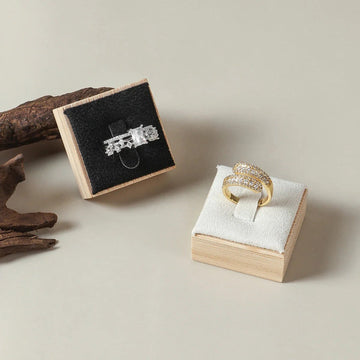
Gold, a piece of jewelry — whether it is gold, silver, platinum, or set with a stone — is by nature shiny or reflective. Placed on an absorbent matte background, its sparkle stands out even more. The contrast between the brightness of the jewelry and the depth of the velvet is immediate.
It is the same optical principle as a diamond cut on a black cushion: the stone appears whiter, brighter, more precious.
The "light box" effect
When a directional spotlight illuminates a piece of jewelry placed on velvet, the light concentrates solely on the piece. The surrounding velvet remains in deep shadow. The jewelry seems to float in its own halo. This theatrical effect is the visual signature of high jewelry.
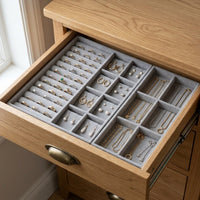
Velvet trays for your signature pieces
Burgundy, black, midnight blue, taupe gray: all the shades to showcase your jewelry.
View velvet traysBuying psychology: velvet reassures
Velvet does not just embellish the jewelry: it reassures the customer. Several studies in sensory marketing have shown that the tactile and visual perception of a premium display significantly increases the estimated value of a product, and lowers resistance to purchase.

The "ritual" effect
When a jeweler takes out a velvet tray to present a ring, they stage a ritual. This solemn, almost ceremonial gesture creates a memorable experience. The customer no longer looks at a simple piece: they experience a moment, which psychologically justifies a higher price. This ritual is impossible on a bare plastic or metal tray.
Price justification
An €800 ring presented in a plastic bag seems overpriced. The same ring presented on burgundy velvet in a black velvet-lined box appears fair or even attractive. The display elevates the piece into another category of perceived value. It is an extremely powerful sales mechanism that jewelry stores have known for a long time.
Emotional engagement
The soft touch of velvet activates emotional associations: comfort, softness, intimacy. This is particularly effective for jewelry linked to a major moment (wedding ring, engagement, birthday gift). Velvet enhances the emotional impact of the purchase.
Physical protection for pieces
Beyond aesthetics and psychology, velvet is also a functional material. It offers a soft surface that protects jewelry from the inevitable micro-scratches on a hard surface (plastic, metal, acrylic). This is valuable for set pieces, cut stones, fine chains.
Velvet displays also prevent rings and earrings from slipping unintentionally. On an acrylic tray, a ring slips at the slightest movement. On velvet, it stays exactly where you put it. For a jeweler who handles dozens of pieces a day, this stability is highly appreciated.

The power of colors in jewelry
Not all velvet colors are equal. Each sends a particular visual and cultural message.
| Color | Message | Jewelry to favor |
|---|---|---|
| Deep black | Universal, maximum contrast | Light stones, gold, silver, platinum |
| Burgundy | Warmth, traditional elegance | Yellow gold, rubies, garnets |
| Midnight blue | More contemporary signature | Sapphires, silver, white gold |
| Taupe gray, cream | Contemporary, soft | Minimalist pieces, oxidized silver |
Deep black
Universal, it suits all types of jewelry. It is the color of maximum contrast for pieces set with light stones (diamonds, topazes, white pearls) and for shiny metals (gold, silver, platinum). It is the default choice of most jewelry stores.
Burgundy
Historical color of jewelry. It evokes warmth, passion, traditional elegance. Ideal for yellow gold jewelry, rubies, garnets, warm stones. It is also the signature shade of the great houses.
Midnight blue
Rarer, it works wonderfully with sapphires, blue diamonds, silver or white gold jewelry. It conveys a slightly more contemporary signature than burgundy.
Taupe gray and cream
Rising colors for contemporary brands that want velvet without falling into the classic jewelry signature. Taupe gray accompanies minimalist pieces, oxidized silver jewelry, modern creations particularly well.
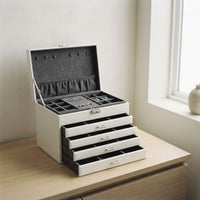
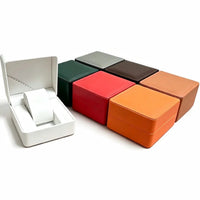
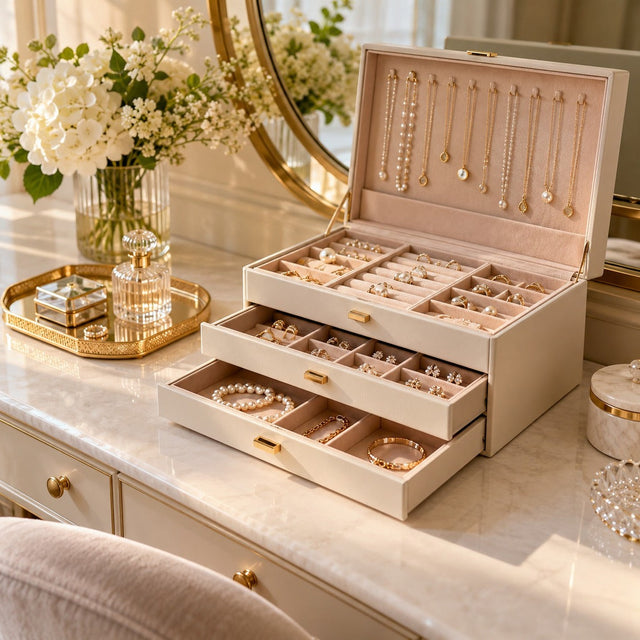
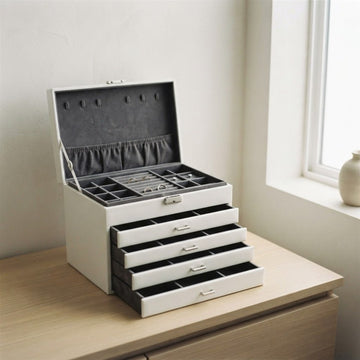
Jewelry boxes and velvet cases
From tray to box, enhance each piece in its own case.
View velvet boxesWhen velvet is not suitable
Velvet is not universally superior. Certain situations require other materials.
For outdoor markets
Velvet collects dust, catches fibers, marks easily, and does not withstand moisture. For a market stand, it is better to combine wood and suedine or faux leather, which are more robust during transport.
For an ultra-contemporary signature
A very minimalist, very tech, or very sleek brand may look dated if it uses classic velvet. It is better then to bet on clear acrylic, gray faux leather, or matte black metal.
For playful costume jewelry
Velvet is deliberately serious. For young, colorful, fun, joyful jewelry, it can weigh down the whole. A presentation on light wood or colored acrylic will be more in line.

How to incorporate velvet into your brand
Step 1: choose a signature color
Only one, or two complementary ones maximum. Black + burgundy velvet is a traditional winning duo. Black + taupe gray velvet is more contemporary. Avoid rainbows of colors that disperse attention.
Step 2: combine with a structuring material
Velvet alone floats in the void. Place it on a walnut or beech wood base, in an acrylic frame, in a faux leather case. The rigid structure gives the presence, velvet brings the depth.
Step 3: plan for maintenance

Invest in a soft clothing brush, a gentle cleaning kit, and schedule a weekly dusting. Well-maintained velvet keeps its shine for years. Neglected velvet has the opposite effect of the desired one.
Step 4: extend the experience to packaging
Velvet must follow the customer home: velvet-lined pouch, velvet case, velvet cloth to maintain the jewelry. The consistency of the journey reinforces the perception of a premium brand.
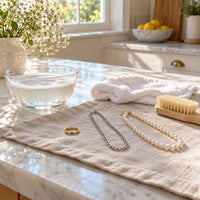
Maintaining your velvet displays: the simple schedule
Well-maintained velvet keeps its shine for years. Maintenance consists of a few gestures, spread out over time rather than done all at once.

Every week: brush and dust
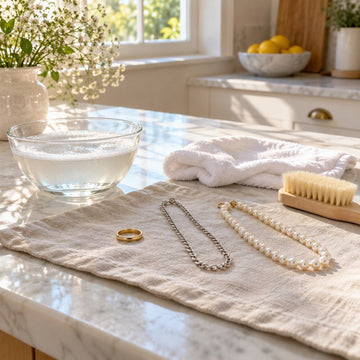
Pass a soft clothing brush in the direction of the fibers, or a blast of compressed air into the crevices and grooves. A surface that does not retain dust almost never needs anything else.
After a mark: blot, never rub
Act quickly with a barely damp cloth, dabbing from the edge toward the center. Rubbing crushes the fibers and enlarges the stain. Then let it dry flat, away from a heat source.
For crushed velvet: restore the fibers
An area flattened by repeated use can often be restored with steam from an iron held at a distance, followed by gentle brushing in the direction of the fibers. Test first on a hidden corner.
For storage: away from light and moisture
Store the trays flat, in a dry place and away from the sun, which fades dark shades. Do not stack them with jewelry on top: the weight marks the fibers.
For details by material, see how to clean and maintain your jewelry displays.
Velvet, suede, cotton: fabrics not to be confused
In a catalog, all soft coverings look alike. In use, they behave very differently. Here is how to tell them apart.
| Fabric | Appearance | Key takeaway |
|---|---|---|
| Velvet | Raised fibers, very matte | Depth, luxurious effect |
| Suede | Smooth, suede appearance | Retains less dust |
| Cotton, linen | Matte, natural canvas | Handcrafted look |
Velvet: raised fibers
True velvet has a surface made of short, raised fibers that absorb light. This is what gives the deep background described above. It comes in cotton, silk, and polyester.
Suede: a smoother suede appearance
Suede imitates suede: its surface is smoother and flatter. It retains less dust than velvet and is well suited to trays and contact pads, but it offers less visual depth.
Cotton and linen: a matte, natural look
These canvases have a more rustic appearance, without fiber depth. They are suited to natural or handcrafted settings, less so to pieces that need to shine in a dark case.
Which one to choose depending on the use?
For a prestigious showcase, velvet. For intensive use or direct contact with fine pieces, suede or high-quality polyester velvet. For a natural setting, linen or cotton.
Creating a velvet showcase: heights, light, and colors
Velvet provides the background; the staging does the rest. A few guidelines are enough for a showcase that can be read at a glance.

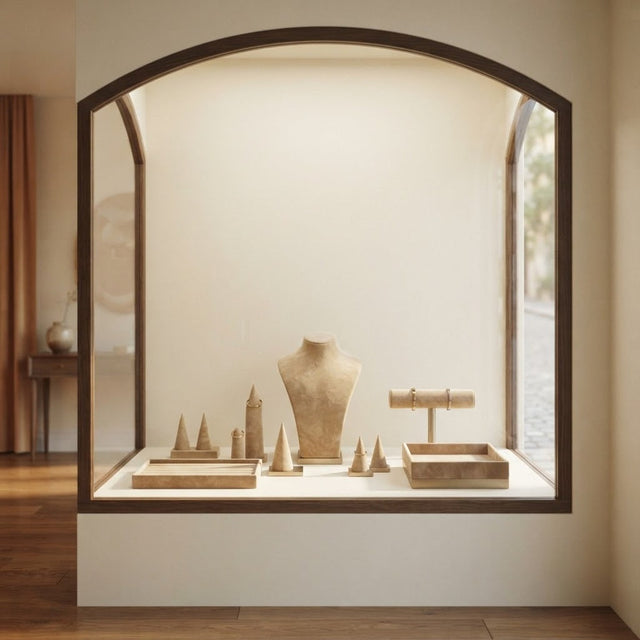
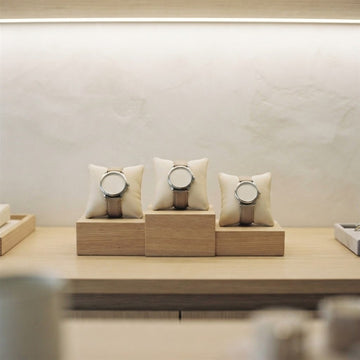
Three heights to guide the eye
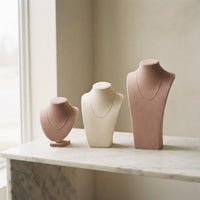
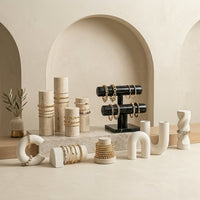
A low level (trays), a medium level (cushions, cones), and a high level (busts) create a path. Place the signature piece at eye level, where the eye naturally rests.
A spotlight for the featured piece
Direct a spotlight on the main piece and leave the rest of the velvet in the shadows: this is the "light case" effect described above. Conversely, uniform lighting flattens the scene.
One dominant color per showcase
Keep one dominant velvet color, possibly a second. Mixing three shades disperses attention and weakens each piece.
An empty tray is better than a full tray
Do not fill every compartment: a piece surrounded by empty space appears more precious. This is the principle of the classic jewelry showcase, where a few pieces occupy a lot of space.
Our velvet favorites
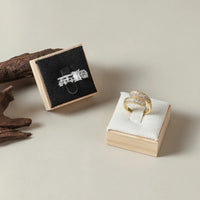
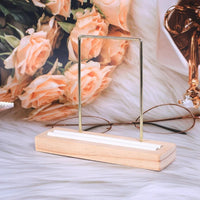
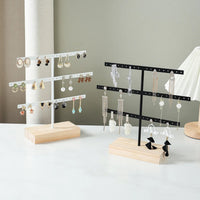
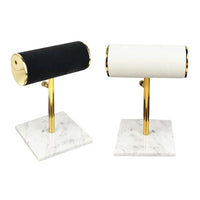
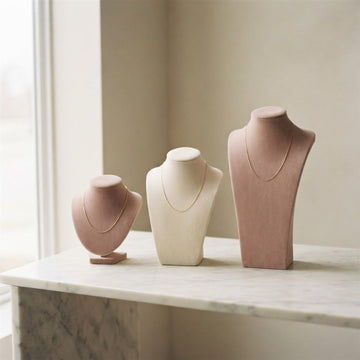
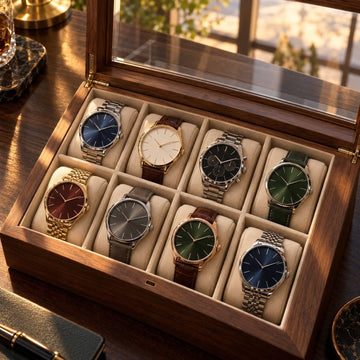
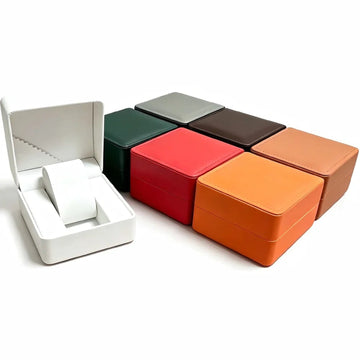
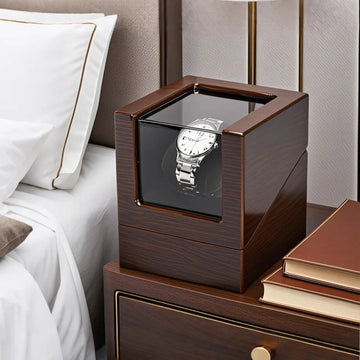
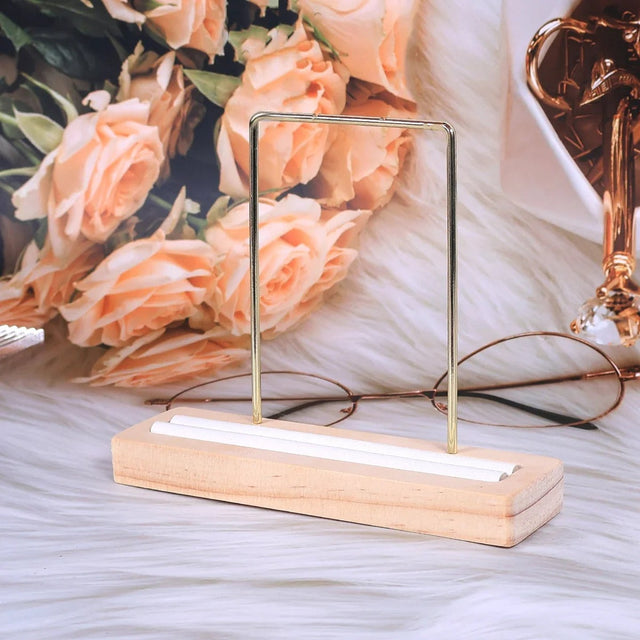
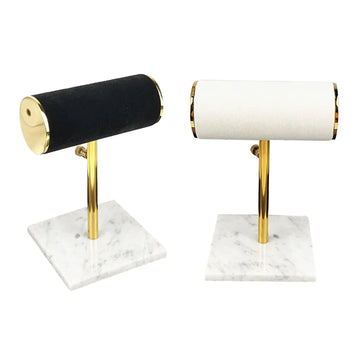
Four models to go from theory to showcase, from the bust for necklaces to the cushion for watches and bracelets. All are chosen according to the size of the showcase and the jewelry to be displayed.


More choices in the velvet jewelry display collection, including jewelry busts and jewelry cushions.
Conclusion: velvet, a strategic investment
Velvet in jewelry is not a cliché of the past: it is a sales mechanism that combines visual impact, purchasing psychology, physical protection, and cultural signature. Used well, it immediately enhances your pieces, increases perceived value, reassures the customer, and creates a memorable experience.

Whether you run a classic jewelry store, a premium artisanal brand, or a high-end e-commerce site, incorporating velvet into your scenography is a high-return investment, provided you maintain color consistency and regular maintenance.
Discover our velvet trays and displays
All colors, all sizes, to enhance your creations like a major house.
Explore the collectionFAQ — Velvet displays in jewelry stores
Why does velvet make jewelry look shinier?
Its matte surface absorbs light instead of reflecting it. The contrast between the dark background and the shiny jewelry visually accentuates the latter's brilliance. It is the same principle as the black case of a cut diamond.
What velvet color to choose to start?
Deep black remains the most versatile choice: it highlights all types of jewelry and stones. Burgundy is ideal if you offer a lot of yellow gold pieces.
Is velvet suitable for costume jewelry?
Yes, and it is particularly interesting. It increases the perceived value of your creations and justifies a higher price positioning than a simple presentation on plastic.
How to maintain a velvet display?
Gentle brushing with a clothes brush in the direction of the fibers, weekly dusting, or a blast of compressed air for difficult areas. In case of a stain, dab immediately with a damp cloth.
Does velvet mark over time?
Yes, especially areas of repeated contact (where rings are placed, for example). This is why velvet cushions and trays are replaced every 3 to 5 years in active jewelry stores.
Can velvet and wood be combined without looking dated?
Absolutely. Walnut wood + black velvet = elegant classic signature. Light mango wood + taupe gray velvet = premium contemporary signature. These combinations are, on the contrary, very current.
Is synthetic velvet as effective as natural velvet?
Visually, yes. High-quality polyester velvet offers the same visual depth and resists stains better than cotton or silk velvet. For intensive commercial use, it is even often recommended.
What velvet color to choose for silver jewelry?
Black and midnight blue provide the best contrast with silver and white gold. Taupe gray also works for a softer signature, with a little less contrast.
How to restore crushed velvet?
Brush gently in the direction of the fibers, then present the area to the steam of an iron held at a distance, without pressing. Test first on a hidden corner.
What is the difference between velvet and suede?
Velvet has raised fibers that absorb light and give a deep background. Suede, smoother and with a suede appearance, retains less dust but offers less depth.
Why are jewelry cases almost always lined with velvet?
Velvet protects the pieces from scratches, prevents them from slipping, and makes their brilliance stand out. It also carries an image of luxury that customers associate with valuable jewelry.
Should you choose black velvet or burgundy velvet for a showcase?
Black suits all jewelry and gives the maximum contrast. Burgundy brings warmth and flatters yellow gold and warm stones. Choose one of the two as the dominant color.
How often to clean velvet trays?
Weekly brushing is enough for an active showcase. Treat marks as soon as they appear and plan a replacement every 3 to 5 years for the most used areas.
Get our next articles
Tips, guides and new arrivals, straight to your inbox.