
























What is the best ring display if you have limited space?
Best ring display when space is limited
Are you looking for a small-space ring display capable of displaying several pieces without sacrificing elegance or readability? This is one of the most common challenges for new creators, jewelry stores with mini-display cases, compact market stalls, or shared concept stores. Good news: there are highly effective solutions that transform a small space into a professional presentation.

The challenge: maximum visibility, minimum footprint
When space is limited, every square centimeter must work. A poorly chosen display eats up the display case without presenting enough rings. The right compact display meets three fundamental criteria: it has a small footprint, it uses verticality, and it maintains sufficient spacing between each ring.
The classic mistake is trying to fit as many rings as possible flat on a mini-tray. The result: a "flea market" effect that instantly devalues your pieces.

The ring tower: the space-saving champion

The ring tower is, without question, the best format when space is limited. It stacks 4 to 8 levels of ring slots in a tiny footprint.
Typical features
- Footprint: 8 to 12 cm in diameter
- Height: 18 to 30 cm depending on the number of levels
- Capacity: 15 to 30 rings
- Common materials: velvet, faux leather, rotating wood
Its strengths
The tower immediately adds height to your display case, catches the eye from afar, and presents all the rings at eye level. Some models are rotatable.
Its limitations
The tower works better for rings of similar styles than for a very varied mix.
The vertical bar and tiered displays

The stepped display
Step format, generally between 12 and 20 cm deep by 20 to 30 cm wide. It holds 8 to 16 rings lined up.
The fan display
More original, it fans out the rings in an arc on two levels. Typical footprint: 15 x 12 cm for 8 to 10 rings.
The rotating vertical bar
A rotating bar holding 2 to 3 levels of rings lined up. Compact (10 cm in diameter) and highly visual.
Discover our compact ring displays
Towers, bars, stepped displays: our models maximize visibility.
View our ring displaysThe compact tray and pegboard

The mini ring tray
Half-tray format (24 x 17 cm) or quarter format (17 x 12 cm). It holds 8 to 14 rings arranged on velvet inserts.
The vertical pegboard
Widely used for markets and compact stalls. Allows you to hang 12 to 25 rings with very little depth (5-7 cm).
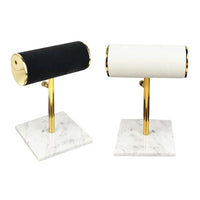
The rolled ring holder
Small cylinder covered in velvet. Very compact (8 cm in diameter, 12 cm long), it holds 10 to 14 rings.
Corner displays and wall solutions
The corner display
Designed to fit into a corner of a display case. Capacity: 12 to 20 rings on 2 to 3 levels.
The compact wall panel
A small perforated or velvet panel (30 x 30 cm). Capacity up to 30 rings, without taking up any floor space.
The mini floating shelf
A narrow shelf (5 cm deep) fixed to the wall, on which you line up 6 to 10 rings on individual supports.

Comparison table of compact solutions
| Format | Footprint | Capacity | Ideal for |
|---|---|---|---|
| Ring tower | 8-12 cm Ø | 15-30 rings | Homogeneous collections |
| Stepped display | 12-20 x 20-30 cm | 8-16 rings | Comparing ranges |
| Fan | 15 x 12 cm | 8-10 rings | Unique pieces |
| Rotating vertical bar | 10 cm Ø | 10-18 rings | Narrow counter |
| Mini-tray | 17x12 or 24x17 cm | 8-14 rings | Low display cases |
| Vertical pegboard | 5-7 cm deep | 12-25 rings | Markets and stalls |
| Rolled holder | 8 cm Ø, 12 cm L | 10-14 rings | Premium mini-display cases |
| Corner display | Fits into the corner | 12-20 rings | Optimizing corners |
| Perforated wall panel | 0 (fixed to the wall) | 20-30 rings | Stores with a back wall |
| Mini floating shelf | 5 cm wall depth | 6-10 rings | Minimalist brands |
5 tips for optimizing a small space

- Prioritize verticality over horizontality. A 25 cm tower displays three times as many rings as a tray with the same footprint.
- Limit yourself to two materials maximum.
- Prefer a solid, dark background. Contrast makes each piece stand out.
- Use directional lighting. A precise spotlight on the ring tower immediately creates hierarchy in the display case.
- Refresh the selection regularly. Display 60-70% and rotate every month.
Design your compact display case with the right supports
From a vertical ring display to a compact tray, optimize every centimeter.
View all our displaysHow to measure your space before choosing a display?
Before comparing models, take three measurements: the available width, depth, and height. A display that barely fits into the space always looks too big once placed, and it hinders the readability of the rings.
Measure the free surface
Note the width and depth of the space, then subtract about two centimeters on each side. The display must be able to be handled, moved, and allow light to pass through.
Check the height under the glass or shelf
A tower of 18 to 30 cm must fit under the ceiling of the display case, lighting included. Measure the useful height, the one that is actually left under the glass, and not the height of the front.
Think about the customer's viewing angle
A display is read from the front, but also from the side. Place it so that the rings remain visible from where the customer stops, without having to lean over.
Leave room to grow
A collection grows. Allow room for two or three more rings, or a second display from the same family, so you don't have to change everything with the next shipment.
How many rings to display without overloading the display?
More rings does not mean more sales. The customer looks poorly at a saturated display and ends up choosing nothing. Readability comes before quantity, regardless of the size of your display case.
Spacing of about 2 cm
On a mini-tray, a spacing of 2 cm between the rings is the professional guideline given above. Each ring keeps its own space, without touching its neighbor, and stands out on the background.
Display 60 to 70% of the collection
The tip already mentioned remains the best: only display 60 to 70% of your rings and rotate the selection every month. The display always looks new, and the pieces set aside return at the right time.
Group by family
Wedding rings, solitaires, fashion rings: one area or level per family. The customer understands the organization at a glance and compares the models more easily.

What material and color will make the rings stand out?
A small display is noticed first by its material and color. The right choice is the one that makes the ring stand out without drawing attention to itself.
The dark background that makes the pieces stand out
As tip number three reminds us, a solid and dark background makes each ring stand out, especially gold and silver. Black or midnight blue velvet remains the great classic.
Wood for a warm atmosphere
Wood, light or walnut, gives a soft atmosphere, suitable for creators and craft markets. It pairs very well with a velvet insert that holds the ring.
Metal and acrylic for a modern style
Matte metal and transparent acrylic offer a graphic and light presentation. They require careful lighting to avoid reflections on the rings.
| Material | Atmosphere | Best for |
|---|---|---|
| Black or midnight blue velvet | Classic, contrasting | Gold, silver, solitaires |
| Light wood | Soft, natural | Creators, craft markets |
| Dark wood (walnut) | Warm, refined | Light rings, wedding rings |
| Matte metal | Modern, clean | Thin rings, minimalist style |
| Transparent acrylic | Light, almost invisible | Small display cases, fine pieces |
Which display to choose according to the type of ring?
Not all rings are presented the same way. The shape of the ring guides the choice of display, well before the size of the showcase.
Wedding bands and thin rings
The rolled cylinder, presented in the comparison table, is ideal for wedding bands and thin rings: each ring finds its place on the velvet cylinder without slipping.
Bulky rings or rings with large stones
For bulky rings, choose a tiered display, already recommended above: more spaced-out slots allow the piece to breathe and highlight the stone.
Mixed collection
A varied collection is presented in two steps: a tower for the main style, a plate or a mini-tray for secondary pieces, as suggested in the conclusion of this article.
Rings to lay flat or to slide on
A ring laid flat on a velvet insert reads like a small jewelry object. A ring slid onto a cylinder or rod reads as if worn on the finger: choose according to the effect you want to create.

Market, counter, or closed showcase: which display to adapt?
The same display does not serve the same purpose on a market and in a showcase. The location sets the constraints: wind, foot traffic, height, light.
On a market stand
The vertical perforated plate is widely used: it requires little depth and is easy to transport. A fixed and stable display remains preferable, as table movements and passing visitors quickly displace a rotating model.
On a narrow counter
The rotating vertical bar, with its 10 cm diameter, finds its place on a very narrow counter. The ring tower does the same job with a little more capacity.
In a closed showcase
A fixed display is more stable behind glass. A warm and directional LED spotlight, placed slightly above and to the side, gives relief to the rings without reflection.
Against a wall
The wall panel, the corner display, and the floating shelf free up the floor. They are suitable for a shop with an available back wall.
| Location | Recommended display | Why |
|---|---|---|
| Market stand | Vertical perforated plate | Little depth, easy to transport |
| Narrow counter | Vertical bar or ring tower | Only 8 to 12 cm in diameter |
| Closed showcase | Fixed display or mini-tray | More stable behind glass |
| Permanent shop | Rotating display | The customer turns it while walking around |
| Available back wall | Wall panel or floating shelf | Completely frees up the floor |
What mistakes to avoid with a ring display?
A few mistakes almost always recur in small showcases. By knowing them, you gain space and readability.
Cramming everything flat on a mini-tray
This is the classic mistake, already described above: the "flea market" effect devalues the pieces. Go vertical before filling the surface.
Mixing too many materials
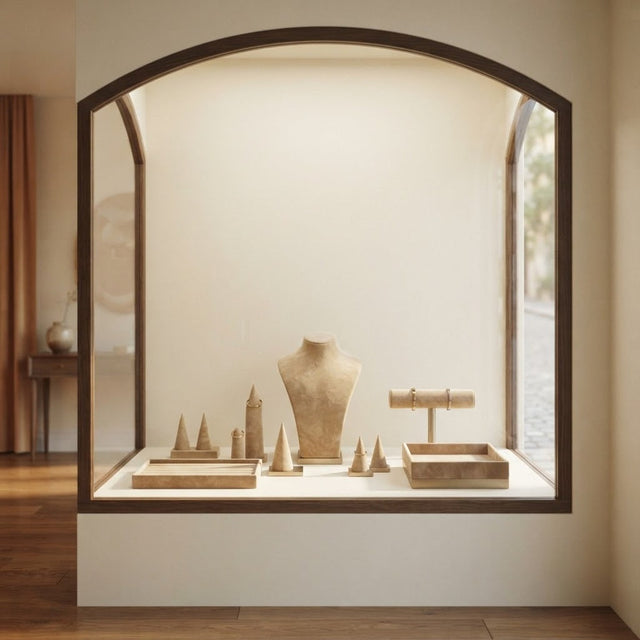
Velvet, wood, metal, acrylic, and marble in the same corner: the eye no longer knows where to rest. Keep two materials at most.
Forgetting the lighting
A well-chosen but poorly lit display loses half its effect. A directional spotlight on the ring tower immediately prioritizes the showcase.
Never renew the selection
A display that does not change ends up no longer being looked at. Rotate the rings every month to keep the attention of regular customers.
How to maintain and store your ring display?
A clean display highlights the rings, a dusty display dulls them. A few regular gestures are enough to keep velvet, wood, and metal in good condition.
Dusting velvet without damaging it
Pass a soft brush or a dry microfiber cloth, always in the same direction. Avoid rubbing hard: velvet flattens and leaves lighter areas.
Wiping wood and metal
A barely damp soft cloth is enough for wood and metal, followed by a dry wipe. Avoid overly aggressive products that dull the finish.
Storing between presentations
Store the rings before moving a display, then store it away from humidity and sun. Slide a sheet of tissue paper between two stacked trays to avoid friction.
Checking inserts and slots
Regularly check that the velvet inserts hold well and that the slots have no chips. A ring placed on a damaged support risks being scratched.

Our favorites: four ring displays to discover
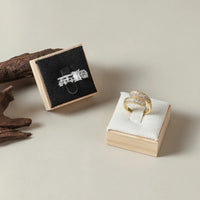
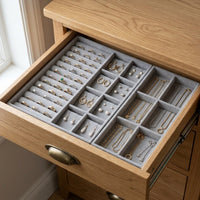
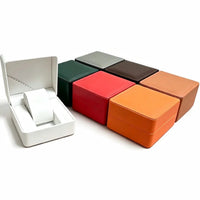
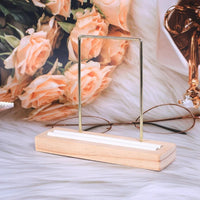
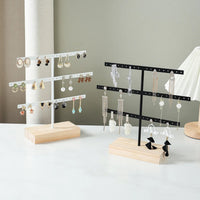
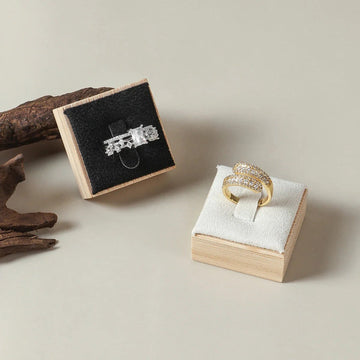
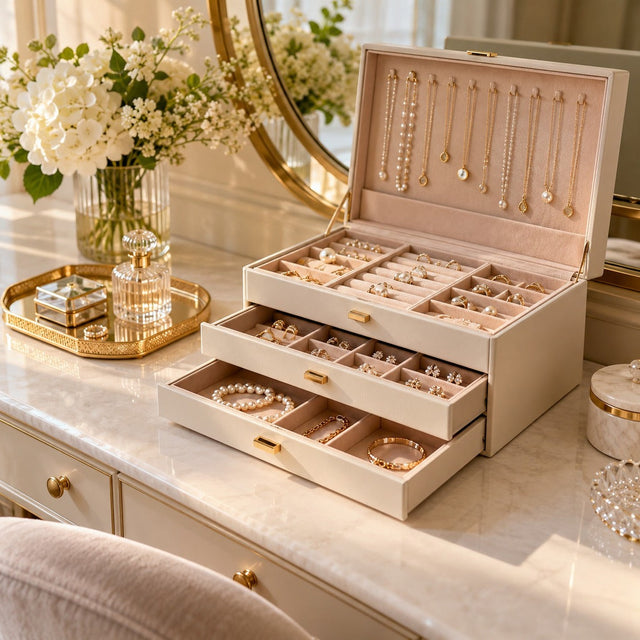
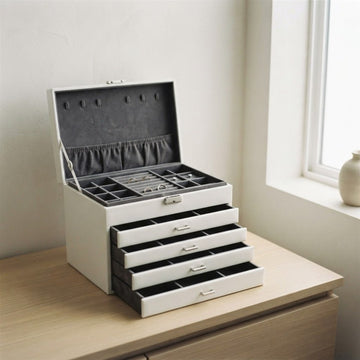
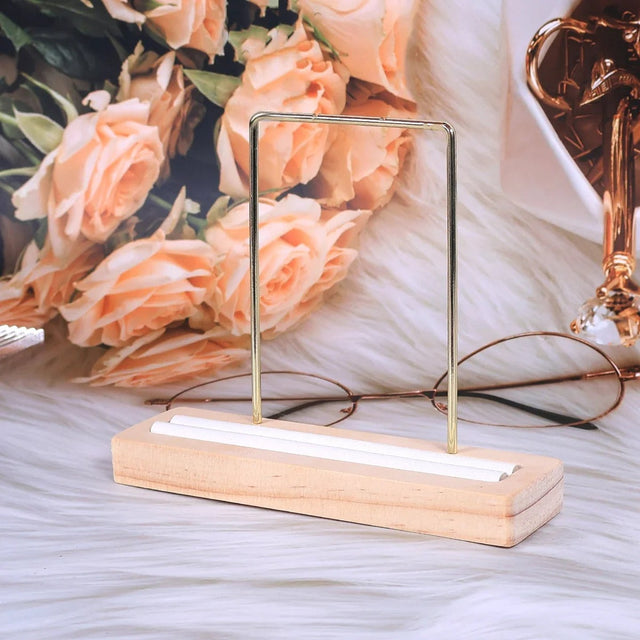
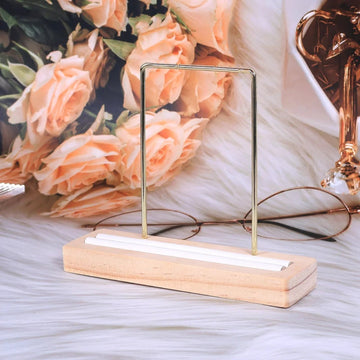
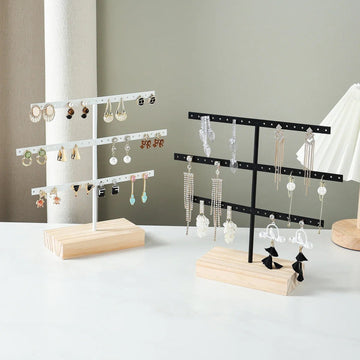
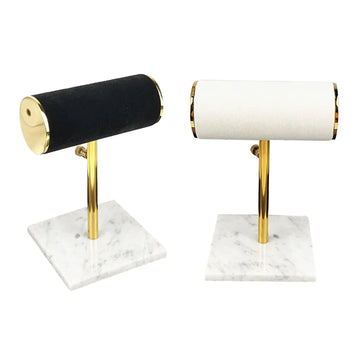
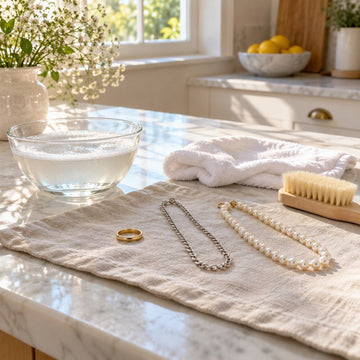
These four models illustrate the compact formats seen above: a tiered velvet display, a slanted slotted tray, a wooden V-slot support, and a small wooden and velvet ring holder. Each is chosen according to the number of rings and the available space.


To browse the entire range, visit the ring displays collection, jewelry trays or jewelry holders.
Conclusion: little space, big impact
The ring tower remains the undisputed champion of space-saving, followed by tiered displays, perforated plates, and wall solutions. By combining a main vertical format with a plate or mini-tray for secondary pieces, you will get a dense, readable, and professional showcase, even in a narrow counter.

FAQ: small space ring display
What is the ring display that takes up the least space?
The ring tower offers the best capacity/floor space ratio. The perforated wall panel is even more radical because it completely frees up the floor.
Can you use a ring tower for rings of very different sizes?
Yes, provided that the slots are spaced out enough. For bulky rings, choose a tiered display.
How many rings maximum on a mini-tray?
A 24 x 17 cm mini-tray comfortably holds 12 to 14 rings with a professional spacing of 2 cm.
Is a perforated wall plate suitable for a premium jewelry store?
Yes, provided you choose a high-end plate and respect a regular spacing.
Should you favor a rotating ring display?
The rotating is very useful in a permanent shop. On a market or in a closed showcase, a fixed display is more stable.
How to light a compact ring display?
Use a warm and directional LED spotlight, placed slightly above and to the side.
Is the ring roll a good small space solution?
Yes, particularly for wedding band and thin ring collections.
Get our next articles
Tips, guides and new arrivals, straight to your inbox.