
























What material should I choose for a jewelry display?
Why the choice of display material is essential
Choosing the right material for your jewelry displays is the first decision that conditions the entire perception of your brand. Even before the customer examines the piece, their gaze rests on the support.

Warm wood, luxurious velvet, transparent acrylic, industrial metal, natural linen, contemporary faux leather: each material tells a different story and speaks to a particular clientele. This guide helps you understand the strengths and weaknesses of each option to make an informed choice, whether you are a brand new creator, an established jeweler, or a professional looking for renewal.
The result: a consistent presentation, a better conversion rate, and a memorable customer experience.
Why the display material matters as much as the jewelry

The material of a display acts like a frame around a painting. The same silver necklace can look ordinary on a flashy background, sublime on black velvet, artisanal on a raw wood bust, or ultra-modern on a transparent acrylic support. The material is not a decorative detail: it plays on three strategic levers.
First, the perceived value. A deep velvet immediately suggests a precious piece of jewelry, even when the piece is gold-plated or silver. A light wood signs craftsmanship and the rarity of handmade creation. Next, the brand consistency: all your supports must speak the same visual language, or risk blurring your identity.
Finally, the functionality: some materials protect jewelry better than others, last longer, travel better.
Wood: authenticity and warmth

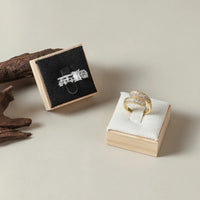
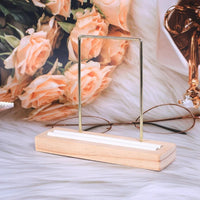
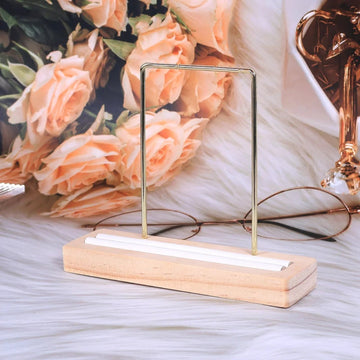
Wood remains the favorite material of creators and brands with an artisanal, natural, or eco-responsible positioning. Mango, beech, oak, bamboo, walnut, pine, veneered MDF: each wood has its personality.
Its strengths
- Unmatched visual and tactile warmth
- Great sturdiness against repeated handling
- Perfect alignment with sustainable and ecological values
- Stylistic versatility: from Scandinavian to bohemian
Its limitations
Wood is sensitive to prolonged moisture and can scratch if the finish is not protected. It is also heavier than other materials, which complicates repeated transport at markets. To compensate, many displays combine wood and velvet or wood and linen for a more protective and higher-end look.
Discover our natural wood displays
From necklace bust to ring tray, wood enhances every artisanal creation.
View wood displaysVelvet: luxury and visual depth

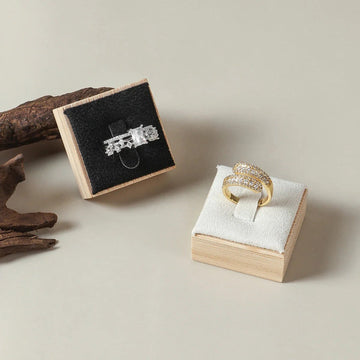
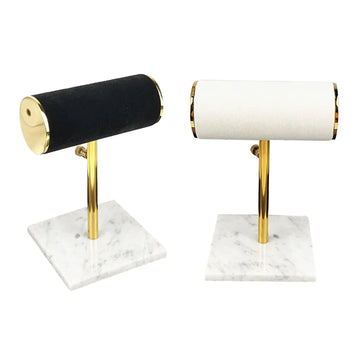
Velvet is the historic signature of high jewelry. Its texture absorbs light instead of reflecting it, which creates a deep, matte background on which jewelry seems to emerge. Burgundy red, deep black, midnight blue, taupe gray, or cream: each shade tells a different message.
Its strengths
- Unmatched highlighting of shiny stones and metals
- A tactile softness that instantly elevates perception
- Natural protection of jewelry against scratches
- A great variety of colors adaptable to any identity
Its limitations
Velvet retains dust and fibers. It requires regular brushing or a blast of air. It is also more delicate to clean in case of stains. Outdoors (open-air market), it takes the rain and wind.
For these reasons, it is often used indoors or as a complement to a structuring display in wood or acrylic.
Acrylic: modernity and light

Acrylic (often called plexiglass) is the material of contemporary and minimalist brands. Its transparency literally makes the support disappear to leave only the jewelry and the light.
Its strengths
- "Floating" effect that enhances fine and golden pieces
- Light, easy to transport
- Unbreakable unlike glass
- Compatible with LED lighting for light effects
Its limitations
Acrylic scratches visibly, retains fingerprints, and does not have the warmth of wood or the nobility of velvet. It is a "technical" material that we appreciate for its efficiency more than for its emotion. Ideal in a lit showcase and e-commerce, less so in a friendly artisanal market stand.
Metal: character and structure

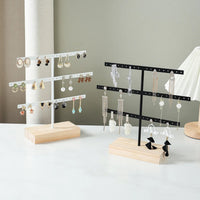
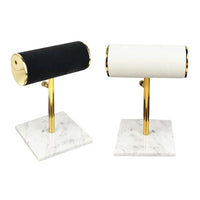
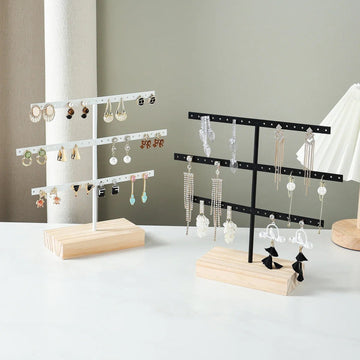
Metal — brass, brushed steel, copper, painted aluminum, wrought iron — brings a strong graphic signature. It is suitable for brands that claim an industrial, vintage, urban, or ultra-contemporary universe. Matte black metal jewelry trees, for example, have become iconic for presenting fine necklaces and earrings.
Its strengths
- Clean lines, strong presence in the showcase
- Very long lifespan
- Compatible with an industrial, loft, masculine, or unisex universe
Its limitations
Metal can seem cold or "hard" if the entire scenography is in the same tone. It pairs better when mixed with wood or textile to soften the look. Some metals (raw copper) oxidize upon contact with moisture.
Multi-material jewelry trays
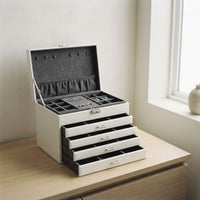
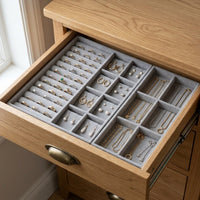
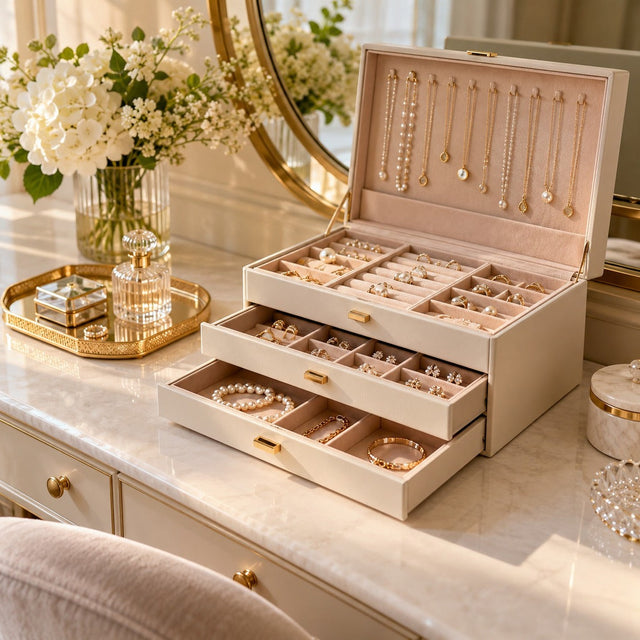
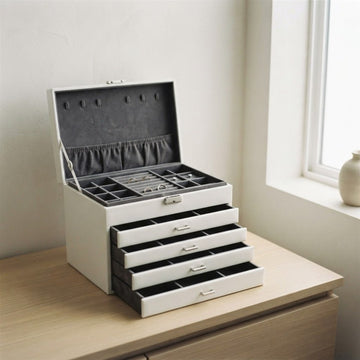
Velvet, linen, faux suede, or faux leather: find the tray that enhances your pieces.
View jewelry traysLinen, faux suede, faux leather: textile finesse
Textile coverings cover a wide range of styles. Natural linen evokes slow life, nature, bohemian chic. Faux suede (synthetic suede) imitates the effect of suede with a very high-end touch. Faux leather structures a contemporary and masculine presentation.

These textiles are mainly used as a covering for trays, showcase bottoms, cushions, or display cases. They protect jewelry from scratches, add a tactile softness, and allow to visually unify a heterogeneous scenography.
| Textile | Effect | Common use |
|---|---|---|
| Natural linen | Slow life, natural, bohemian chic | Backdrops, trays, covering |
| Faux suede | Suede effect, high-end touch | Trays, cushions, covering |
| Faux leather | Contemporary and masculine | Structure of a presentation |
How to choose according to your business?

Are you an artisanal jewelry creator?
Favor wood (mango, beech, bamboo) possibly combined with linen or light faux suede. This palette reinforces the authenticity of your creations and resonates with a clientele sensitive to handmade and eco-responsibility.
Are you a traditional jeweler or in goldsmithing?
Deep velvet remains the standard, in burgundy, black, or midnight blue. It immediately enhances precious pieces. Combine it with walnut wood bases to anchor the scenography.
Do you run a contemporary, minimalist, or unisex brand?
Transparent acrylic and matte black metal make up a very modern signature. Mix them with gray or taupe faux leather to soften the overall look.
Do you sell at markets and itinerant events?
Sturdy wood remains your best ally. Add a few velvet trays for the flagship pieces and a textile bust for the necklace focus. Avoid fragile acrylic in repeated transport.
Do you run a premium e-commerce?
For your packshots, opaque white or transparent acrylic and black velvet backgrounds give the best photo results. For gift packages, betting on faux leather or velvet cases makes all the difference.
Common mistakes to avoid
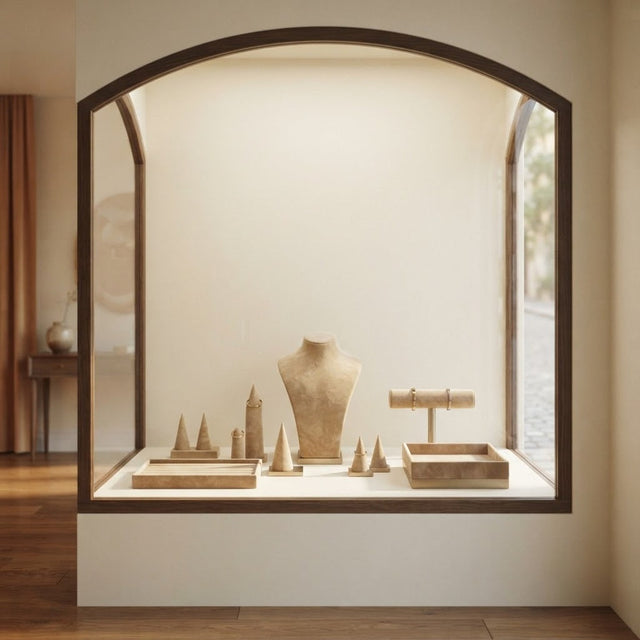
The first mistake is the anarchic mix. If each display comes from a different universe — rustic wood, hyper-modern plexiglass, rococo velvet — the customer does not understand your brand. Choose two dominant materials maximum, and a third as an accent.
The second mistake is under-investing in the main display. If your showcase or your stand has a focal point (the signature necklace bust, the premium dome), that is where you need to put maximum quality: a dense velvet, an oiled solid wood, an impeccable finish. The rest can be more modest.
The third mistake is neglecting the consistency with the packaging. A jewelry presented on luxury black velvet then put back in a generic plastic bag breaks the entire promise. The material must follow through to the pouch or gift box.
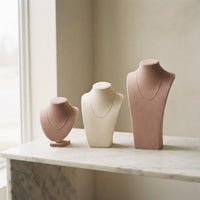
Necklace busts: wood, velvet, or acrylic
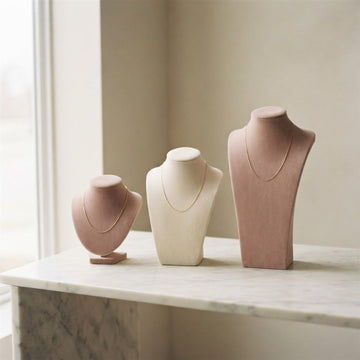
The necklace bust is the centerpiece of your showcase. Choose carefully.
Discover necklace bustsHow to test a material before adopting it
In a photo, two materials can look close. A few simple tests avoid bad surprises.

The touch and gaze test
Run your hand over the surface: a dense velvet is soft and even, a well-finished wood is smooth without splinters, a painted metal has no burrs or chips.
Also look at the seams and edges of the textile coverings: they must be clean.
The light test
Place a shiny jewelry on the material and look at it under the lighting of your showcase or your stand. A matte background makes the reflections of the jewelry stand out, a shiny background competes with them.
Redo the test in daylight, then under a lamp.
The usage test
Imagine the life of the display: sitting in a shop window all year round, or being transported every week? In the latter case, choose materials that can withstand impacts and friction.
Materials are chosen as much for their appearance as for their everyday use.
| Test | What to check | Materials to look at closely |
|---|---|---|
| Touch | Softness, finish, edges | Velvet, wood, textiles |
| Light | Reflections, matte or glossy background | Acrylic, metal |
| Use | Impacts, friction, moisture | All materials |
Combining materials: three pairings that work
Two dominant materials and one accent material are enough. Here are three common combinations that are easy to recreate.
Wood and velvet: the versatile duo
A wooden base or stand, velvet trays or cushions: wood provides structure, while velvet protects and enhances. This is the recommended combination for getting started.
It works for both delicate jewelry and pieces set with stones.
Acrylic and metal: the contemporary duo
Transparent acrylic and matte black metal create a clean, modern display. To soften the overall look, add a grey or taupe faux leather background, or a small wooden element.
Wood and linen: the natural duo
Light wood with natural linen or light faux suede creates a soft, bohemian-chic atmosphere. It is ideal for artisanal jewelry designers and brands with a natural style.
| Duo | Atmosphere | For whom? |
|---|---|---|
| Wood + velvet | Warm, high-end | Beginners, jewelers |
| Acrylic + metal | Modern and clean | Contemporary brands |
| Wood + linen | Natural and soft | Artisanal designers |

Caring for each material over time
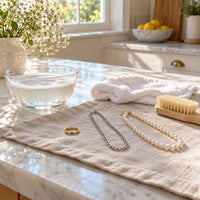
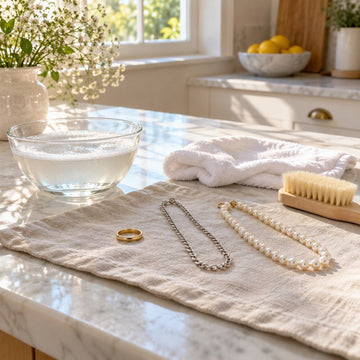
Proper care extends the life of a display and keeps the jewelry looking its best. The techniques differ depending on the material.

Wood and metal
Dust the wood with a soft cloth and condition it occasionally with a little oil or wax. Avoid prolonged exposure to moisture.
Wipe metal with a dry cloth. Bare copper oxidizes when exposed to moisture: store it in a dry place.
Velvet and textiles
Brush velvet regularly or use a dust blower to remove dust and fibers. If it gets stained, blot without rubbing.
Keep textiles away from rain and wind.
Acrylic
Use a microfiber cloth and mild soapy water. Avoid alcohol, acetone and ammonia.
Acrylic scratches: place a piece of fabric between the jewelry and the stand.
| Material | Recommended care | Avoid |
|---|---|---|
| Wood | Soft cloth, oil or wax | Prolonged moisture |
| Velvet | Brush or dust blower | Rain and wind |
| Acrylic | Microfiber, mild soapy water | Alcohol, acetone |
| Metal | Wipe dry | Moisture on bare copper |
Our favorites: four materials, four displays
One model per material to compare the actual effect: wood, velvet, acrylic and metal. Continue with the wooden jewelry displays, velvet jewelry displays, acrylic jewelry displays and metal jewelry displays.


Conclusion: the material is your signature
Choosing the material for your displays means choosing the tone of your brand. Ask yourself three simple questions: who am I speaking to (customers), where am I selling (shop window, stand, e-commerce), what do I want them to feel (luxury, authenticity, modernity, boldness)? The answer to these three questions will almost automatically tell you which material to choose.

And don't forget: it is better to invest in a few well-chosen, cohesive display pieces than in a crowd of disparate stands that visually cancel each other out.
Also discover: our cotton jewelry displays and resin jewelry displays.
FAQ — Choosing the material for a jewelry display
What material should I choose if I am just starting out?
Start with a mix of light wood + black or burgundy velvet. It is the most universal, durable, and flattering combination for pretty much every type of jewelry.
Is velvet suitable for costume jewelry?
Yes, and particularly well. Velvet immediately enhances the piece and increases its perceived value, which is valuable for plated or semi-precious stone creations.
Is acrylic suitable for outdoor markets?
Moderately. It is prone to scratches during transport and can glare in direct sunlight. Choose it for fixed shops and covered salons instead.
How many different materials should I use in a shop window?
A maximum of two dominant materials, plus a third as an accent. Beyond that, the eye gets lost and brand consistency collapses.
Does metal age well?
Yes, provided you choose treated finishes (varnished brass, stainless steel, painted cast aluminum). Bare copper and raw iron oxidize within a few months in humid environments.
Which material is the most affordable?
Entry-level acrylic and veneered MDF are the most affordable options. For a good, durable value for money, light solid wood remains unbeatable.
Can all these materials be combined?
Yes, provided you follow a visual hierarchy. Use wood as a base, add velvet for premium areas, and complete with a little acrylic or metal to add rhythm.
What fabric should I choose to line a jewelry tray?
Velvet provides a deep background and protects against scratches, faux suede adds a high-end feel, and linen gives a natural style. The choice depends on the atmosphere you are looking for.
What material should I choose for a professional jewelry display?
Put the best quality on the main display: oiled solid wood or dense velvet. The other stands can be simpler, in the same color palette.
Is faux leather suitable for displaying jewelry?
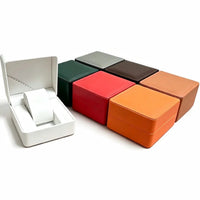
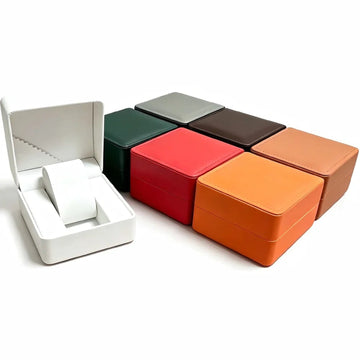
Yes: it creates a contemporary, masculine presentation. It is also suitable for jewelry boxes and gift boxes.
How can I protect delicate jewelry from scratches?
A velvet, faux suede, or linen lining protects the pieces. On acrylic, place a piece of fabric between the jewelry and the surface.
How can I prevent a shop window from looking cluttered with several materials?
Limit yourself to two dominant materials and one accent material, in colors that complement each other. The customer will then understand your brand at first glance.
Get our next articles
Tips, guides and new arrivals, straight to your inbox.