
























Wooden vs. Plexiglas jewelry display: which one to choose?
Wooden or plexiglass jewelry display: a choice that matters

Choosing between a wooden jewelry display and a plexiglass (acrylic) display is rarely a minor decision: the entire visual identity of your brand is at stake. Wood brings warmth, authenticity, and a handcrafted touch highly sought after by jewelry designers and bohemian boutiques.
Plexiglass, on the other hand, offers transparency, modernity, and a near-floating presentation that enhances delicate, gold, or multicolored pieces. Before investing, you need to compare these two materials based on concrete criteria: aesthetics, durability, care, versatility in a market or shop window, and, of course, budget.
This detailed guide helps you decide based on your style, your customer base, and your constraints—so that every piece of jewelry finally finds the support that does it justice.
Aesthetics: two styles, two customer bases
The first criterion is the emotion the display evokes. A wooden stand—light oak, beech, bamboo, mango, or walnut—instantly creates a natural, warm, and carefully crafted atmosphere. It pairs perfectly with handcrafted jewelry, semi-precious stones, leather pieces, or bohemian creations.
It is the favorite material of brands that champion an authentic, sustainable, slow-fashion identity.
Plexiglass (or clear acrylic), by contrast, visually recedes to let the jewelry take center stage. Ideal for gold, silver, fine pearl, or colored stone pieces that you want to make "float" in space.
It works particularly well for contemporary, minimalist, premium brands, or in highly lit shop windows where transparency amplifies reflections.
What kind of atmosphere is wood best suited for?

Handcrafted fairs, designer markets, bohemian boutiques, eco-responsible concept stores, traveling exhibitions: wood is an obvious ally in all of them. It pairs well with textiles, faux suede, linen, and provides a tactile material that customers love to touch. It is also an excellent storytelling tool for a brand that champions sustainable values.
What kind of atmosphere is plexiglass best suited for?

High-end jewelry shop windows, department store corners, e-commerce with product shots, luxury trade shows: plexiglass stands out for its absolute neutrality. It does not draw attention; it directs it toward the jewelry. With good LED lighting, the effect is striking.
Discover our wooden and acrylic displays
Busts, necklace supports, trays, ring holders: find the material that matches your brand identity.
View the full collectionDurability and resistance over time
The question of lifespan is essential, especially if you transport your displays to markets several times a month or handle them daily in a boutique.
Wood: sturdy but sensitive to moisture
A well-finished solid wood display can last for years without flinching: it withstands impacts, develops a patina, and is easily restored with a little oil or wax. However, it is sensitive to prolonged moisture, extreme temperature fluctuations, and scratches from pointed jewelry if the finish is not protected.
For outdoor use (open-air markets), choose treated or waxed wood.
Plexiglass: solid but sensitive to scratches
Acrylic is lighter than glass and much more impact-resistant. It does not shatter into a thousand pieces. However, its surface scratches easily with repeated contact from metal jewelry. A scratch on clear plexiglass is immediately visible, unlike wood, which "absorbs" signs of wear.
To protect it, avoid abrasive cloths and place velvet, faux suede, or linen in areas of direct contact.
| Criterion | Wood | Plexiglass |
|---|---|---|
| Impact resistance | Very good | Good |
| Scratch resistance | Good (and discreet) | Average (visible) |
| Sensitivity to moisture | High | Very low |
| Lifespan with heavy use | 5 to 15 years | 3 to 8 years |
| Repairable / restorable | Yes | Difficult |
Daily care and cleaning
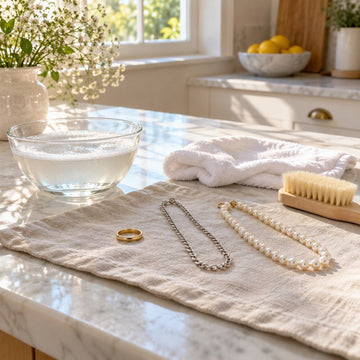
Wood requires little maintenance: a slightly damp soft cloth, and occasionally a layer of linseed oil or wax to nourish the material. Avoid harsh chemicals that would discolor the natural hue.

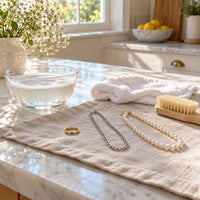
Plexiglass requires more attention to visible cleanliness. Any fingerprint, dust, or splash is immediately noticeable. Use a microfiber cloth, never paper towels (which scratch), and a special acrylic cleaner or simply mild soapy water. Avoid alcohol, acetone, and ammonia, which dull or crack the material over time.
| Material | Care | Avoid |
|---|---|---|
| Wood | Slightly damp soft cloth, linseed oil or wax occasionally | Harsh chemicals |
| Plexiglass | Microfiber, special acrylic cleaner or mild soapy water | Alcohol, acetone, ammonia, paper towels |
Versatility: shop window, market, trade show, boutique

Will your display remain stationary in a shop window or travel every week? This question changes everything.
In a fixed boutique
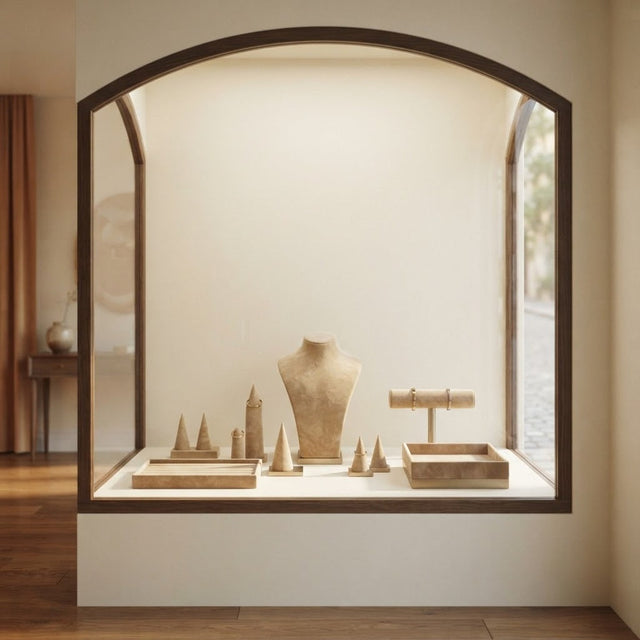
Both materials are suitable. Plexiglass offers tall, airy structures that add dynamism to the shop window. Wood provides a stable, tactile base for warmer compositions. Many jewelry stores combine both: wooden bases to anchor the scene, acrylic displays to add height and light, and velvet trays placed on both.
At markets and traveling events
Plexiglass is lighter and easier to transport, but it scratches in storage boxes. Wood is heavier, but more tolerant of repeated handling. For a designer who does 30 markets a year, a mix of wood + textile accessories (velvet, faux suede) is often the most durable.
In e-commerce and product photography
Opaque white or clear plexiglass is a great ally for photoshoots: it visually disappears and highlights the jewelry. Light wood also works very well on a neutral background to give authentic lifestyle appeal to product shots.
Wooden or acrylic necklace busts: make your choice
From a flat Scandinavian bust to a modern transparent support, explore all styles.
Discover our necklace bustsPrice and value for money
For new items, a quality solid wood display generally costs more than a standard plexiglass equivalent. But it needs to be nuanced: premium plexiglass (8-10 mm thick, polished finishes, complex shapes) can reach prices higher than common wood. For a balanced budget, we observe in practice:

- Entry-level trays and supports: plexiglass is more affordable.
- Signature pieces (sculpted busts, designer supports): wood regains the advantage in terms of perceived nobility.
- Lifespan taken into account: wood often offers a better cost per year of use.
Which material for which type of jewelry?
Rings
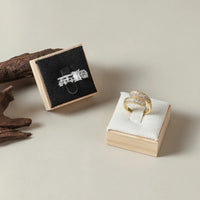
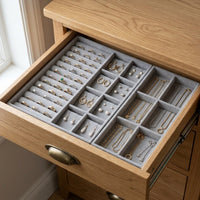
Wooden ring displays (rows of slots, round rolls) have a very warm look, perfect for gold wedding bands or bohemian rings. Plexiglass is unbeatable for highlighting solitaires and cut stones: light passes through the piece and makes it sparkle.
Necklaces
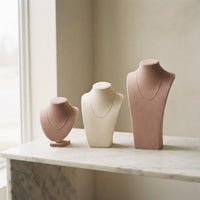
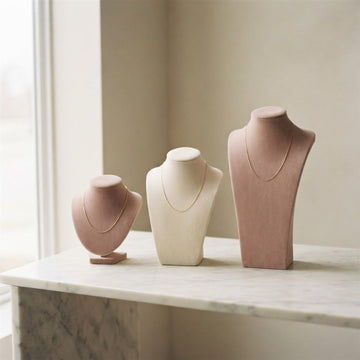
The wooden necklace bust gives a sculptural and handcrafted effect. The clear acrylic bust literally makes the necklace "float", ideal for long and fine pieces.
Earrings
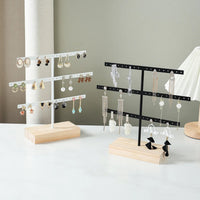
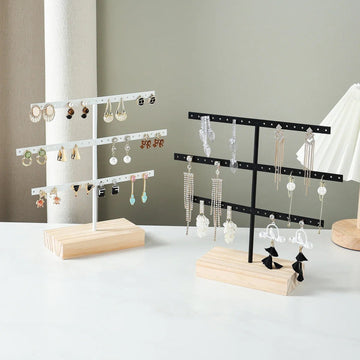
Wooden earring displays (perforated boards, trees) are very trendy and warm. Acrylic is perfect for fine gold studs and hoops that need to be seen through transparency.
Bracelets
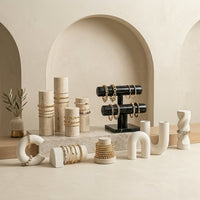
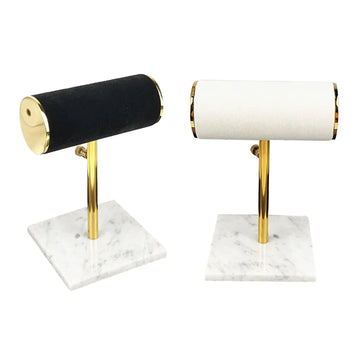
Turned cylindrical wood perfectly dresses rigid bangles and cuffs. Plexiglass is suitable for flexible bracelets that you want to suspend or present flat.
Ring displays: wood, velvet, or acrylic
Enhance every ring with the support suited to your brand identity.
View ring displays
What if you combine both?

The best strategy is not necessarily to choose a side. Many jewelry stores and designers intelligently mix wood and plexiglass to create visual rhythm: wooden bases for the foundation and warmth, acrylic supports for height and light, velvet trays placed on both.
This multi-material approach gives a lively, structured, and premium shop window, without falling into the monotony of a single style.
Also think about complementary finishes: a wooden display covered in velvet, or an acrylic support lined with faux suede, combines the advantages of both worlds. The result is more durable, more protective for delicate jewelry, and infinitely more elegant.
Professional wooden jewelry display: key points to check
Much research focuses on the professional wooden jewelry display: a model that is used every day, in a shop window, in a boutique, or on a stand. A few simple points allow you to judge a support before adopting it.
A finish that protects the wood
Oiled, waxed, or varnished wood resists traces and moisture in a sales area better. A raw surface quickly marks with the contact of fingers and metal jewelry.
Run your hand over the support: it must be smooth, without splinters or rough edges. Also look at the edges: rounded, they do not scratch fine chains or fabrics.
A stable base and suitable dimensions
A counter support must remain straight when touched. A wide base prevents falls, while a foot that is too narrow tips over with a long necklace.
Measure the available space before choosing, leaving space around the support so that the jewelry can breathe.
Light or dark: which wood shade?
Light wood (beech, oak, bamboo) brightens a display case and suits gold or colorful jewelry. Dark wood (walnut) provides contrast for silver pieces and light-colored stones.
The rule of thumb: choose the shade that contrasts with the metal you are displaying, so that the jewelry stands out.
| Point to check | What to look for | Why |
|---|---|---|
| Finish | Oiled, waxed, or varnished | Fewer marks, less moisture |
| Edges | Rounded and smooth | No scratches on the chains |
| Base | Wide and stable | The stand does not tip over |
| Shade | Contrast with the metal | The jewelry stands out |
Wood and metal, driftwood, plexiglass: the most sought-after variants
Around the wooden jewelry display, internet users are often looking for a specific variant: wood and metal, driftwood, or the transparent plexiglass version. Each meets a different need.

Wood combined with metal
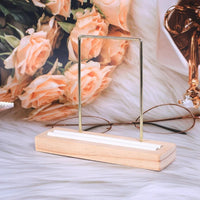
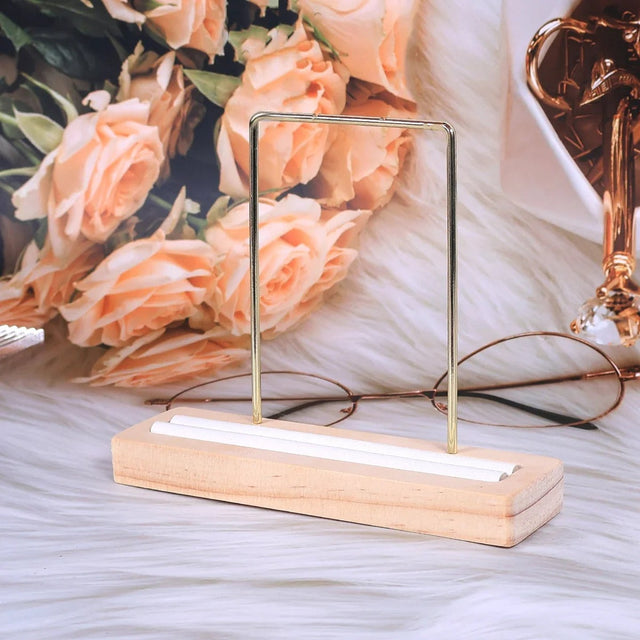
A wooden base holding a metal bar or branches retains the warmth of wood while adding height. It is a common formula for necklaces and earrings.
The fine metal frees up space, the wood ensures stability.
Driftwood: a unique piece
Driftwood has irregular shapes: each piece is different. It appeals for a natural atmosphere, especially on a designer stand.
Its freeform shape requires checking that the jewelry holds well and that the stand does not tip over.
Plexiglass, or plexiglas: the choice of lightness
Plexiglass, a common name for acrylic, is found in thin sheets or thicker blocks. A generous thickness makes the stand more rigid and cleaner to the eye.
It pairs well with a wooden base, combining transparency and warmth.
Properly lighting and photographing each material
The material changes the way light behaves around the jewelry. A few simple adjustments prevent distracting reflections and harsh shadows.
Wood: a soft and diffused light
Wood absorbs light and does not create a reflection. A soft light, coming from the side, brings out its grain without hardening the shadows.
On a neutral background, it gives photos a warm look.
Plexiglass: mastering reflections
Plexiglass reflects light sources. Place the light on the side or above rather than in front, and slightly change the camera angle if a reflection appears.
A solid background avoids distractions behind the transparency.

Our favorites: wood and acrylic side by side
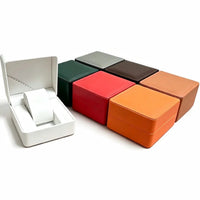
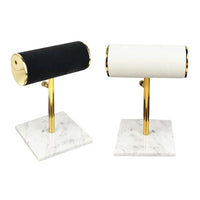
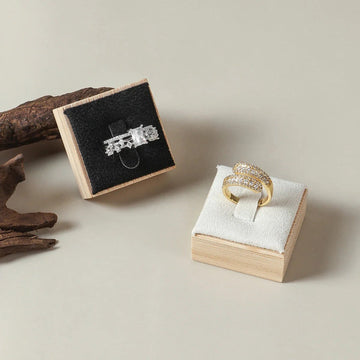
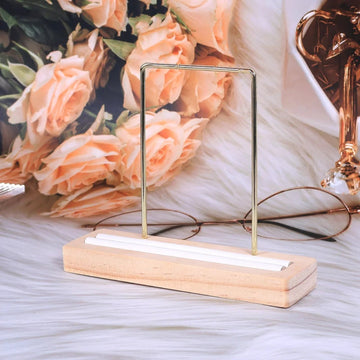
Four models illustrate the two worlds: two wooden stands and two transparent acrylic stands. Find others in the wooden jewelry display and acrylic and plexiglass jewelry display collections.


In summary: your choice depends on your brand
There is no good or bad material in absolute terms — there is the one that matches your identity, your clientele, and your logistics. Wood reassures, tells a story, and enhances craftsmanship. Plexiglass modernizes, lightens the display, and makes every piece shine.

If you are just starting out, begin with a few pieces in each material and observe what your customers touch, photograph, and buy. The answer will come naturally.
Build your display universe
Busts, trays, ring stands, earring holders: everything to showcase your creations.
Explore the full collectionTo go further: Which material to choose for a jewelry display?, Which material to choose for a jewelry display: velvet, faux leather, wood, or acrylic?, Wooden or plastic display: which one lasts longer?, Top 10 most aesthetic jewelry displays for stores, Velvet vs acrylic display: which material to choose? and Wooden, metal, velvet, or linen display: the material guide.
FAQ — Wood or plexiglass for your jewelry
Is plexiglass as elegant as glass?
Yes, of equivalent quality, extruded or cast plexiglass offers transparency very close to glass, with the advantage of being unbreakable and much lighter. For a secure display case, it is often recommended.
Does wood eventually yellow or warp?
Well-treated solid wood remains stable for years. Yellowing mainly affects varnished light woods exposed to direct sunlight. Prefer oiled or waxed finishes and avoid prolonged direct exposure.
How to avoid scratches on an acrylic display?
Use a microfiber cloth, never paper towels, and place velvet or suede between the jewelry and the surface. For light scratches, there are specific acrylic polishing kits.
Which material withstands outdoor markets best?
Wood handles repeated handling and occasional moisture better (if waxed). Plexiglass is lighter to transport but must be protected from friction during transport.
Can you personalize a wooden display?
Yes: laser engraving, burning, painting, adding velvet or leather inserts. Wood is the most versatile material for personalizing with your colors or logo.
Is plexiglass eco-friendly?
Acrylic is less bio-based than wood, but it is recyclable and very durable if well maintained. For an eco-responsible approach, favor FSC-certified or European wood.
Which one enhances colorful costume jewelry better?
Transparent or opaque white plexiglass beautifully highlights colors and translucent stones. Light wood also works very well for a more authentic look.
Which wood to choose for a jewelry display?
Light wood (beech, oak, bamboo) suits gold or colorful jewelry, dark wood (walnut) suits silver pieces. Prefer an oiled or waxed finish, more resistant to marks.
Is a wood and metal display a good compromise?
Yes. The wooden base provides stability and warmth, the fine metal provides height. It is a common formula for necklaces and earrings.
Is driftwood suitable for professional use?
It is well suited to a designer stand for its unique look. As each piece is different, check the stability and the hold of the jewelry before adopting it.
Plexi or plexiglass: is there a difference?
No: "plexi" is the common abbreviation for plexiglass, the usual name for acrylic. This material is found in thin sheets or thicker blocks.
How to mix wood and plexiglass without overloading?
Place wooden bases at the bottom and transparent supports at height. Limit yourself to these two materials to keep a readable display.
Get our next articles
Tips, guides and new arrivals, straight to your inbox.