
























Watch displays: boxes, winders and showcases
Watch displays: cases, winders and display cases
A watch is a special object: at once a piece of jewelry, an accessory and a precision mechanism. Presenting and storing it requires suitable supports that combine aesthetics and protection. From a simple cushion to an automatic winder, and including cases and display cases, discover all types of watch displays and how to choose them according to your needs.

The watch cushion: the essential foundation
The cushion hugs the shape of the strap and gives the watch volume, as if it were being worn. It is the most versatile presentation accessory.
- Strengths: realistic presentation, protects the strap, adapts to all sizes.
- Materials: velvet for luxury, leather for character, linen for a natural look.
- Use: ideal in a display case, in a box or on a counter.
Which cushion size to choose?
The cushion should be slightly wider than the case and round enough to hold the strap without crushing it. A small case looks best on a compact cushion; a large case or thick strap requires a larger cushion.
When in doubt, take the next size up: a slightly generous cushion is less noticeable than one that is too small.
How to place the watch on its cushion?
Close the strap around the cushion, as if around a wrist, with the dial facing forward. The strap thus retains its natural shape and does not fold.
A leather strap left for months on a cushion that is too narrow will eventually develop creases. Change the position of the buckle from time to time to distribute the pressure.
One cushion per watch or one stand for several?
In a display case, one cushion per watch allows each piece to breathe. At home, a stand that holds three or four cushions remains more compact and is easy to store in a drawer or box.
Watch cases and boxes
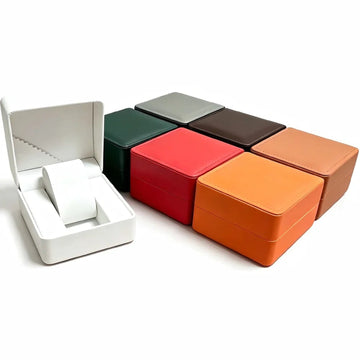
To store and protect several watches, a case is essential. It combines presentation and storage away from dust.

- Strengths: optimal protection, organized storage, beautiful presentation of collections.
- Options: glass lid for displaying, closed for protection, from 3 to 24 spaces.
- Use: collectors, watchmakers, high-end gifts.
How many spaces to plan for?
Count your watches, then add two or three extra spaces: a collection almost always grows. Cases are available in increments, from a few spaces to more than twenty.
A case that is too small forces you to cram the pieces together, which negates its protective benefits.
| You own | Usual size | Note |
|---|---|---|
| 1 to 3 watches | 3 spaces | Start of collection or gift |
| 4 to 6 watches | 6 to 8 spaces | Two extra spaces |
| 7 to 10 watches | 10 to 12 spaces | Established collection |
| More than 12 watches | 24 spaces | Enthusiast's collection |
Glass lid or solid lid?
The glass lid shows the collection without opening the box: you can choose your watch for the day at a glance. The solid lid provides better protection from light and prying eyes.
If the case remains near a window, prefer a solid lid or move it to a shaded area.
What makes a good case on the inside?
Look at the lining: soft, removable cushions protect the glass and strap, while separate compartments prevent the watches from touching. A rigid base and a secure closure complete the set.
All sizes can be found in the watch box collection, and our guide watch box: how to choose one for your collection details the selection process step by step.
Automatic watch winders
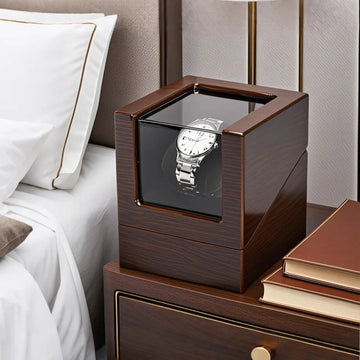
Automatic watches need movement to keep time. The winder replicates wrist movement and keeps the mechanism active.
- Strengths: mechanism maintenance, dynamic presentation, ease of use.
- Options: silent motor, LED lighting, multiple spaces.
- Use: essential for mechanical watch enthusiasts.
How does a winder work?
An automatic watch is wound by a rotor that turns with wrist movements. Left on a table, it eventually stops.
The winder replaces the wrist: a small motor gently rotates the watch, with pauses, so that the mechanism remains active and ready to wear.
Do all watches need a winder?
No. A quartz watch runs on a battery and has no need for one. An automatic watch worn every day is already wound on the wrist.
A winder is mainly useful for mechanical watches worn on a rotating basis, those that spend several days in the box.
What to check before choosing a winder?
- the number of spaces, with one space per automatic watch;
- the motor noise, which is important in a bedroom;
- the direction and rhythm of rotation, to be set according to the watch's instructions;
- the model's power source.
For a particular electrical installation, consult a professional. The models are gathered in the automatic watch winders collection, and our article on choosing a winder provides further guidance.
Watch display cases
To display a collection while protecting it, a watch display case with a glass window is the ideal solution. It enhances each piece and invites contemplation.

- Strengths: secure display, gallery effect, dust protection.
- Use: shops, collectors, exceptional pieces.
Where to place a watch display case?
Choose a wall or piece of furniture away from direct sunlight, far from a radiator and in a dry room. Placed on a stable piece of furniture, the display case avoids vibrations that wear out mechanisms.
At eye level, it can be viewed without bending over and cleaned effortlessly.
Open display case or locked?
A glass window protects against dust and handling. For valuable pieces or a shop, a lock adds the security of risk-free display.
What size display case for what collection?
Allow space for one watch with its cushion, multiply by the number of pieces, and leave room between them. An overcrowded display case hides the dials and makes choosing difficult.
For a growing collection, choose a display case with an additional empty shelf: it will accommodate future acquisitions without reorganizing everything.
Choosing the right one for the right use
The right support depends on your goal:
- Selling in a shop: cushions and display cases for displaying.
- Storing a collection: closed or glass-topped cases.
- Maintaining automatics: winders with a motor.
- Giving a gift: a carefully chosen case or gift box.
| Your goal | Recommended support | What it provides |
|---|---|---|
| Selling in a shop | Cushions and display cases | A clear display |
| Storing a collection | Closed or glass-topped cases | Protection and storage |
| Maintaining automatics | Winders with a motor | Keeps the mechanism active |
| Giving a gift | Carefully chosen case or gift box | A beautiful presentation |
One support or several?
Many collectors combine two supports: a case for everyday storage and a winder for automatics. In a shop, cushions on the counter are combined with a display case for exceptional pieces.
Start with the primary use, then add a second support only if a specific need arises.
Materials and finishes
Aesthetics matter as much as function. Wood brings warmth and authenticity, leather a masculine and refined character, marble and metal a contemporary and luxurious touch. Choose a finish that is consistent with the style of your watches and your brand for a harmonious presentation.

The interior lining matters as much as the exterior
A beautiful wooden box can hide a rough lining. Check that the cushion or base is soft, without fibers that catch the glass or hard seams against the strap.
Velvet, soft leather or tightly woven linen provide a soft touch, while a bare base will scratch over time.
Which finish for which style of watch?
A classic watch pairs well with wood or leather; a technical or contemporary watch, with metal or marble. Keep the same family of materials for all your supports: the collection will benefit from the consistency.
Choosing watch displays based on your collection size
Before comparing models, count your watches: this is the step that prevents you from buying a support that is too small a few months later.
Count your watches, then plan for extra space
Lay all your watches on a table, including those at the back of the drawer, and count them. Then add two or three spaces for future purchases.
The result gives the number of spaces to aim for and, often, the size of the box or winder.
Three collection profiles
- Starter collection: one or two cushions, or a small case.
- Established collection: a medium-sized case, plus a winder for automatics.
- Enthusiast's collection: a large case or display case, with several winders.
The collection changes profile without warning: it's better to have a support that leaves room for more.
And in-store: how many pieces per display case?
It's better to have a few well-spaced watches than a cluttered display case. Each piece needs a little air to be viewed, like in a gallery.
Regularly refresh the featured pieces so that the display case remains lively.
Protecting your watches from light, moisture, and shocks
A good watch display protects as much as it shows. Three enemies always return: light, moisture, and shocks.

Why avoid direct sunlight?
The sun fades dials, dries out leather straps, and heats the case. A box placed on a windowsill is subject to all this, even through glass.
Prefer a solid lid, a cabinet away from the window, or a dimly lit passageway.
Moisture and condensation: the trap of closed spaces
A bathroom or damp basement promotes the corrosion of buckles, crowns, and clasps. In a closed box, moisture remains trapped.
Store the watches in a temperate and dry room, and open the box from time to time to air it out.
Shocks and friction: a place for each watch
Two watches touching each other scratch one another: glass, bezel, links. Each compartment separates the piece from its neighbor and cushions small shocks.
Mechanical watches also do not like magnetic fields: keep them away from magnets and speakers. When traveling, an individual watch case protects them from jolts.
Should watches be stored flat or suspended?
On a cushion, the strap is supported and the watch rests without tension. Suspended by its strap, a watch pulls on its links or clasps, especially if it is heavy.
Flat in a compartment, the dial remains visible and the glass protected.
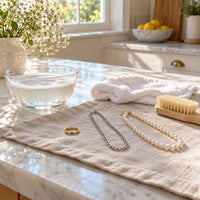
Maintaining cushions, glass, and linings
A well-maintained display protects watches for longer. A few simple steps are enough, to be done when the support is empty.

Cleaning the glass without scratching it
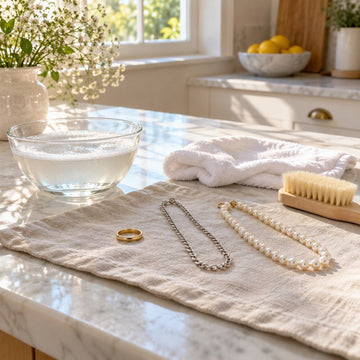
Pass a soft microfiber cloth, dry or barely damp, always in the same direction. Avoid abrasive products, strong alcohol, and rough paper, which leave micro-scratches.
Dry immediately: glass that dries on its own retains traces.
Dusting velvet, leather, and wood
A soft brush removes dust from velvet in the direction of the nap. Leather is cleaned with a slightly damp cloth, wood with a dry or barely damp cloth.
Never use scented household products inside: the odor and residues remain.
How often to check your support?
A glance every three months is enough: closure, hinges, deformed cushions, cracked glass. A flattened cushion is replaced before it lets the strap sag.
What to do with a stained or flattened cushion?
A removable cushion is removed and cleaned separately, according to its material. A flattened cushion rarely regains its shape: it's better to replace it than to let the watch sag.
If the padding is fixed and damaged, a new box protects better than a makeshift repair.
Displaying watches in a store display case
In a store, a watch is sold first by the look. A few staging cues make each piece readable.

A readable dial, a time that does not move
Set the displayed watches to 10:10, the classic display case cue: the hands form a V that leaves the dial clear. All pieces then show the same time, which gives an orderly display case.
A working dial and a well-closed strap complete the picture.
Height and lighting
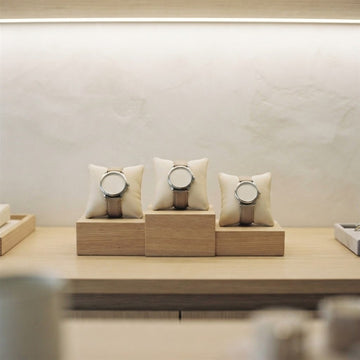
Tier the pieces: some flat on a cushion, others raised on a small step. This variation in height guides the eye from one watch to another.
Soft lighting, oriented towards the dials, avoids reflections on the glass.
One watch per support, never a pile
One support per piece: the customer sees the strap, the dial, and the buckle without moving anything. Avoid stacking cushions, which crush the straps.
Finally, keep the same materials and the same shades of support throughout the display case, in harmony with your brand's universe.
Our favorites: four watch displays to discover
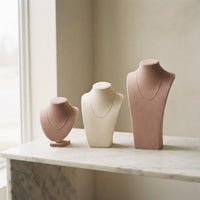
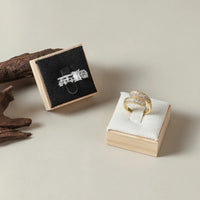
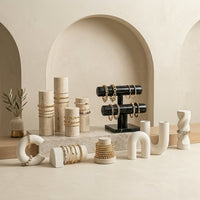
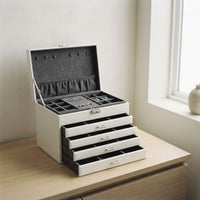
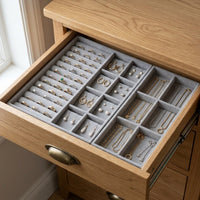
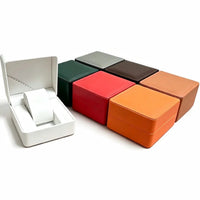
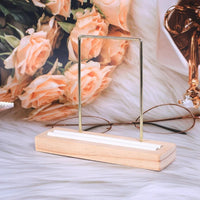
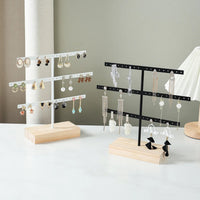
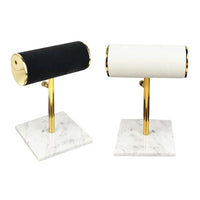
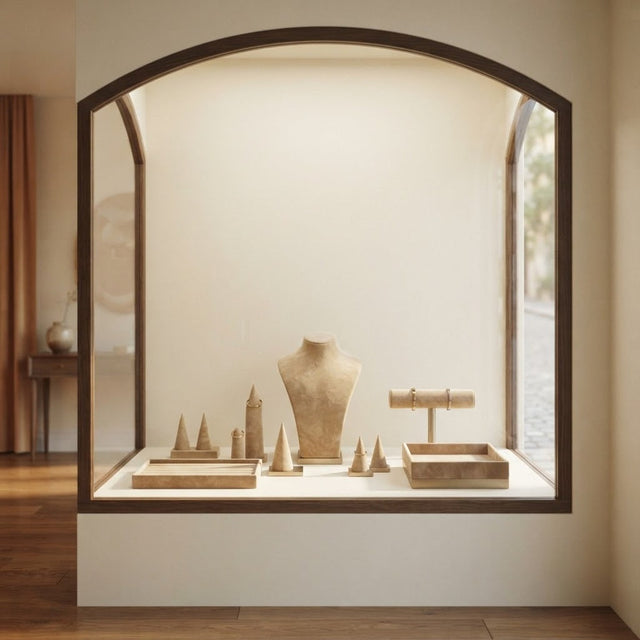
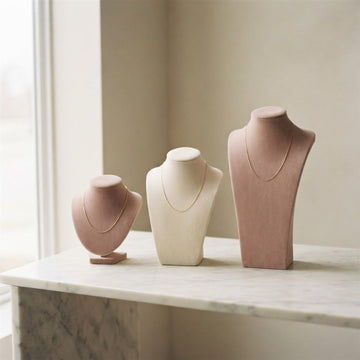
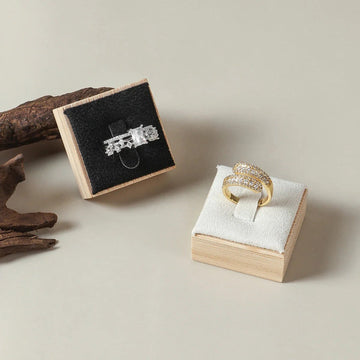
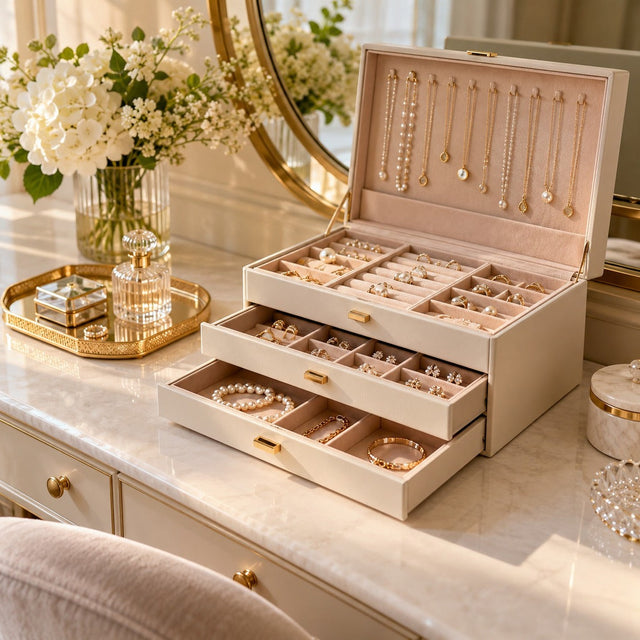
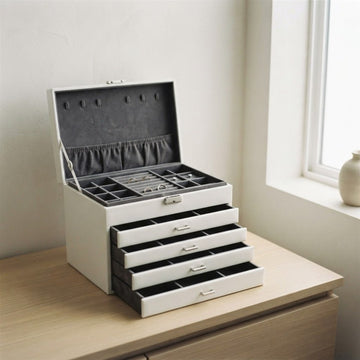
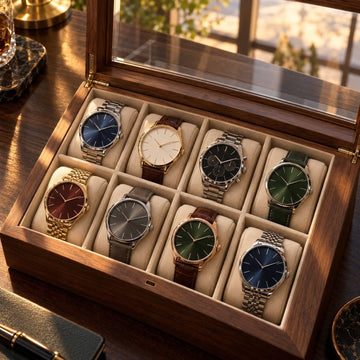
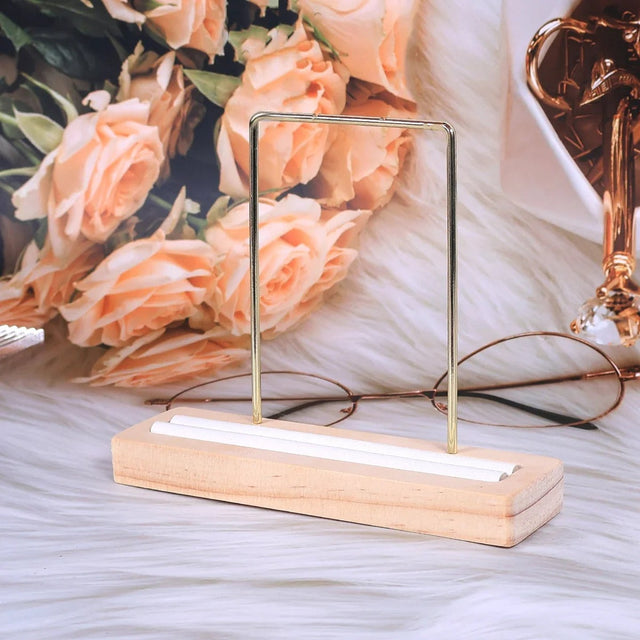
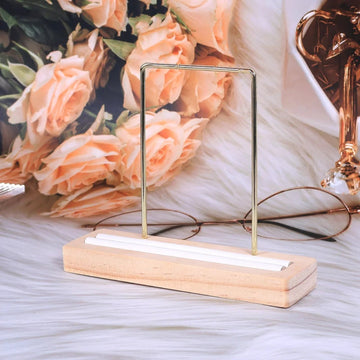
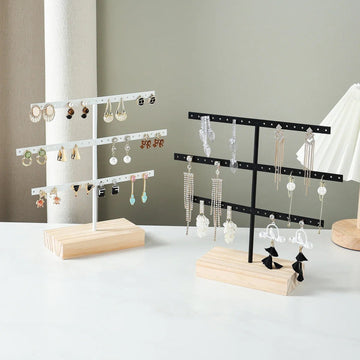
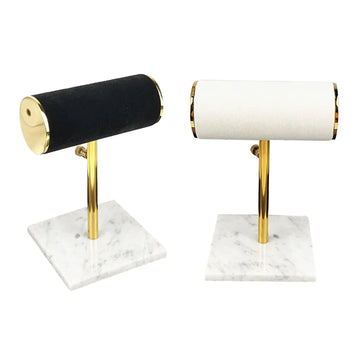
These four models illustrate the major families seen above: the cushion, the counter display, the glass box, and the winder. Each is chosen according to the number of watches and the ambiance of the room.


Conclusion
Cushions for presenting, boxes for storing, winders for maintaining, and display cases for exhibiting: each watch display meets a specific need. By combining these supports according to your uses, you offer your timepieces the presentation and protection they deserve. Discover our selection of watch displays and boxes to enhance your collection.
Frequently asked questions about watch displays
Which watch display to choose for a single watch?
A cushion is enough: it hugs the strap, protects the glass, and gives volume to the watch. For a valuable piece or a gift, a small box or a nice gift box also works.
How many watches can a box hold?
Boxes range from 3 to 24 slots. Count your watches, add two or three extra spaces, and round up to the larger format.
Do you need a winder for a quartz watch?
No. A quartz watch runs on a battery. The winder is only useful for automatic watches, especially when they are worn alternately.
How to prevent straps from deforming?
Place the watch on a suitable cushion, strap closed as if on the wrist, and change the position of the buckle from time to time. A cushion that is too narrow marks the leather.
Can watches be displayed in the sun in a display case?
It's better to avoid it: the sun fades dials, dries out straps, and heats the case, even through glass. Place the display case in the shade or choose a solid lid.
How to store spare watch straps?
Store them flat, in a compartment or a soft pouch, away from light. Avoid folding them by stacking them, especially when they are leather.
What material to choose for a store watch display?
Wood brings warmth and authenticity, leather a refined character, marble and metal a contemporary touch. Keep a family of materials consistent with your brand.
Get our next articles
Tips, guides and new arrivals, straight to your inbox.