
























How to create a luxurious atmosphere with your displays?
Why create a luxury atmosphere with your displays
Luxury is not decreed, it is staged. The same ring, placed on a burgundy velvet cushion under warm light, or simply on a plastic tray, does not tell the same story — and does not sell for the same price.
All the great houses have understood this for a long time: the perceived value of a piece of jewelry depends 50% on the piece, 50% on its staging. Good news: you do not need the budget of the Place Vendôme to reproduce these codes.
With the right displays, the right materials, the right light, and a certain eye for detail, you can transform a neighborhood store or an online window into a true premium showcase.
This guide gives you the complete method to set up an authentic luxury atmosphere with your displays, increase your average ticket, and make the customer feel the luxury even before they touch the piece.

Understanding the visual codes of luxury


Even before the displays, you need to understand what creates the feeling of luxury for a customer. Three universal elements:
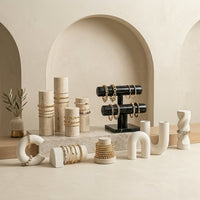
- Space: pieces breathe. Luxury is first of all what we do not show.
- Material: displays and backgrounds speak to the touch before the eye. Velvet, suede, leather, marble, patinated metal: all materials that signal high-end.
- Precision: each piece is positioned to the millimeter. Nothing is left to chance. Luxury does not tolerate approximation.
An ordinary jewelry store piles, juxtaposes, accumulates. A luxury staging breathes, prioritizes, isolates. It is this contrast that you need to aim for.
Choosing fine materials for displays
The display is the first tactile contact with the jewelry — even when it is not touched. The customer instantly perceives, with their eyes, if the material is fine or cheap. The materials that immediately signal luxury:

Velvet
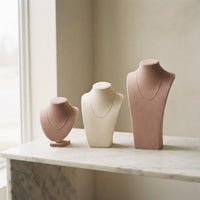
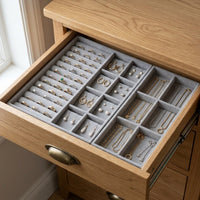
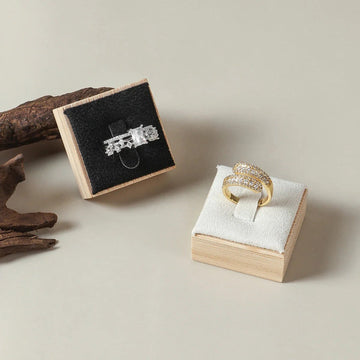
The archetype of luxury. Deep, matte, absorbing light, it highlights the sparkle of stones and the shine of metals through contrast. Favor burgundy, forest green, midnight blue, taupe, pearl gray shades. Avoid shiny or overly synthetic velvet.
Suede
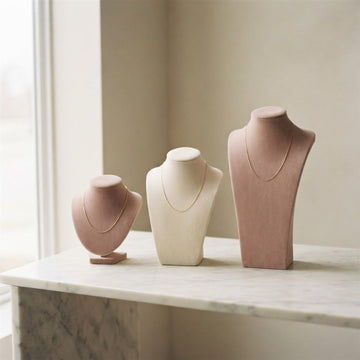
A softer and more discreet cousin of velvet. More accessible, it gives a warm and premium look, perfect for stores with light palettes. Cream, sand, ivory, pearl gray.
Leather and high-end faux leather
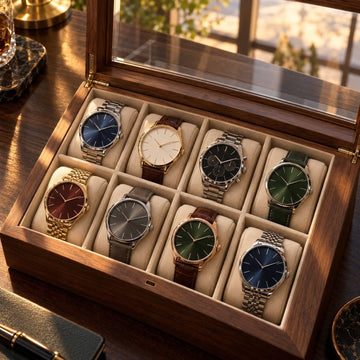
More masculine, it signals seriousness and value. Ideal for watches, men's jewelry, heavy silver pieces.
Marble and stone
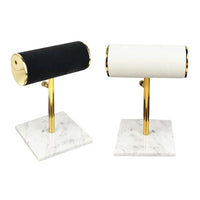
They bring a very contemporary mineral freshness. Veined white marble for fine pieces, black marble for jewelry pieces. Expensive but transformative.
Patinated wood and matte metal
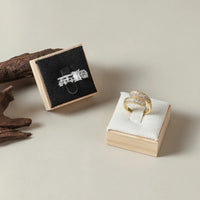
For a more designer or masculine signature. Walnut or dark oak wood, matte black metal, patinated brass. Excellent for sculpted ring displays and graphic pieces.
Consistency rule: choose one dominant material (velvet or suede most of the time) and one accent material (marble, metal, wood). Three materials maximum in the same staging.
The luxury color palette
Luxury uses quiet palettes. No loud colors, no strong saturation. Sobriety is the universal signature of high-end. Three proven palettes:
- Dark velvets + gold: burgundy, forest green, midnight blue, plum, associated with a golden shine. Classic jewelry codes.
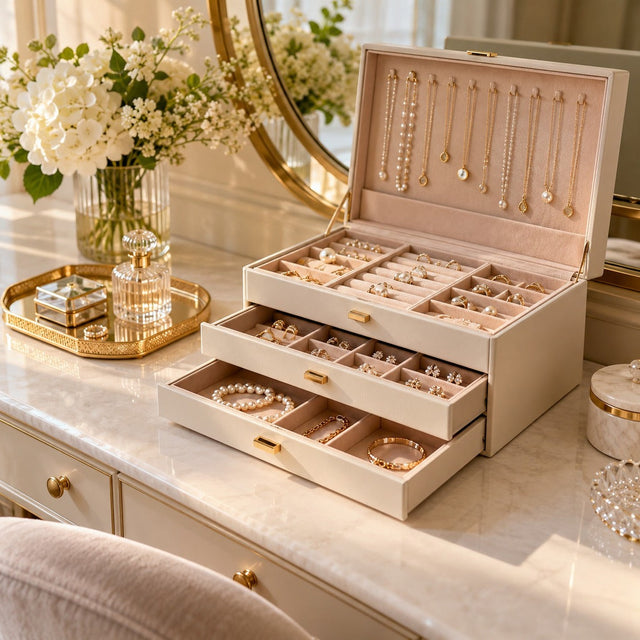
- Cream tones + rose gold: ivory, beige, pale pink, warm gold. Contemporary and feminine codes.
- Black + marble + matte metal: deep black, marbled white, brushed brass, dark steel. Men's and contemporary jewelry codes.
This chromatic sobriety is found in all the displays in the window: busts, trays, cushions, boxes. 100% consistency is non-negotiable. A single disparate color is enough to break the illusion of luxury.
Discover our velvet, suede, and premium material displays
Busts, trays, ring supports, cushions: compose a coherent staging in the codes of luxury.
View the collectionStaging: creating a premium hierarchy
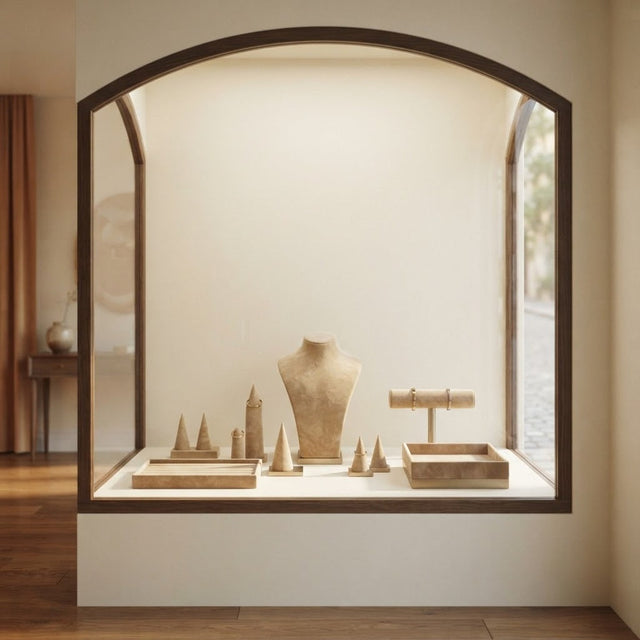
Luxury never exposes everything at the same level. It prioritizes. On a window or a luxury tray, we immediately identify:
- The flagship piece: isolated, highlighted, elevated on a specific display. It catches the eye first.
- The secondary pieces: three or four pieces from the same collection, organized in a clear logic (for example, wedding rings, or pendants).
- The staging details: branch, graphic element, discreet signage.
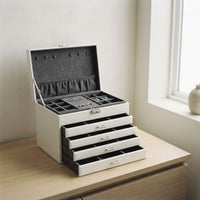
This hierarchy is what distinguishes a luxury window from an alignment of pieces without relief. An open jewelry box slightly in the center, framed by two necklace busts in deep velvet, may be enough to create this hierarchy. The flagship piece does not need to be the most expensive: it must be the most staged.
Light, the signature of luxury
No element signals luxury as much as controlled lighting. Premium stores invest almost as much in light as in furniture — for a simple reason: light makes stones shine, makes metals vibrate, makes displays look deeper.
Warm light for the atmosphere
2700 K to 3000 K, CRI over 90. This warm base immediately gives an impression of a precious showcase. Avoid 4000 K and above for the atmosphere: it is the universal signal of mass commerce.
Directional light for accents
Mini directional spotlights of 3500 K oriented on the flagship piece and the stones. They create that micro-sparkle that we associate with jewelry. A single accent is enough in a small window.
Light integrated into the displays
Mini LED strips hidden under the trays or inside the cases. They create a subtle, almost secret halo, which transforms an ordinary display into a premium showcase.
Ultimate test: the light must make you want to touch the piece. If it makes you want to analyze it, it is too cold.
The details that make the difference in high-end
- Invisible or elegant labels: small cream card with calligraphy rather than a large printed label. Mention "upon request" for exceptional pieces.
- Individual cushions: each flagship piece rests on its own mini cushion, never directly on the common tray.
- Mastered negative space: 40% of the window or the tray remains empty.
- Impeccable surfaces: no fingerprints, no dust, glass polished every day. Luxury does not forgive any negligence.
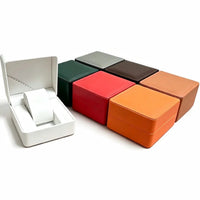
- Packaging consistency: brand cases visible in the window reinforce the perceived value. Avoid displaying open empty cases in disorder.
- Scented details: in a physical store, a subtle olfactory note (cedar, amber, orange blossom) completes the luxury experience.
Three luxury atmospheres to reproduce
Atmosphere 1 — "Classic jewelry showcase"
Deep burgundy velvet + gold. Burgundy velvet busts of varying heights, burgundy velvet trays, mini burgundy velvet cushions for flagship pieces. 2800 K light with 3500 K accent on the solitaire. Golden dried eucalyptus branch in the background. Effect: historic jewelry house. Ideal for set pieces, wedding rings, solitaires.

Atmosphere 2 — "Contemporary jewelry"
Veined white marble + ivory suede + rose gold accents. Marble tray, short ivory suede busts, mini black marble ring support, 3000 K light + 3800 K accent. Effect: contemporary art gallery. Ideal for graphic pieces, premium designers, minimalist jewelry.
Atmosphere 3 — "Men's watchmaker & jewelry cabinet"
Cognac leather + walnut wood + patinated brass. Leather trays, wooden watch supports, taupe suede cushions for signet rings and silver chains. Very warm 2700 K light. Effect: cozy cabinet, private club. Ideal for watches, men's wedding rings, signet rings, silver and leather bracelets.
Compose your luxury atmosphere
Select one dominant material, one accent material, and a quiet palette. Our displays are designed to reproduce the codes of the most beautiful stores.
Discover our premium displaysOur displays to reproduce these atmospheres
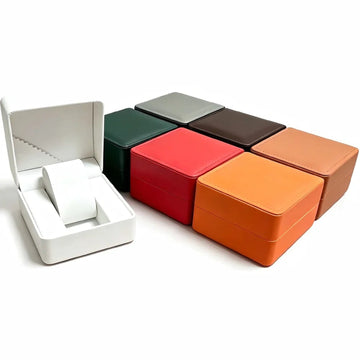
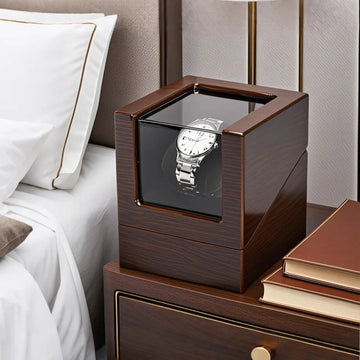
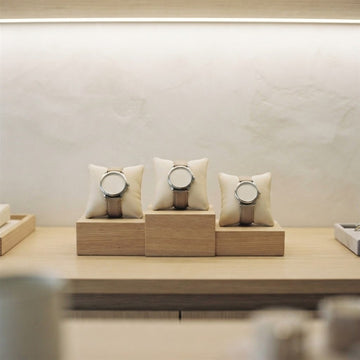
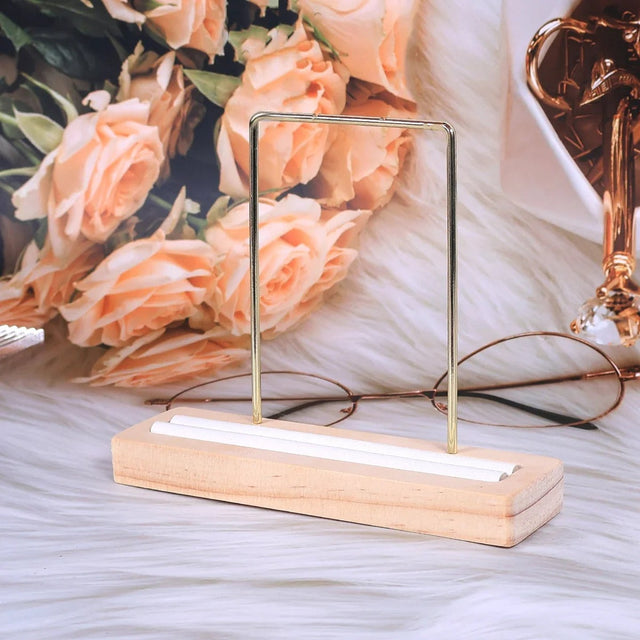
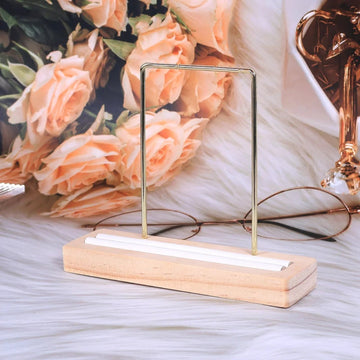
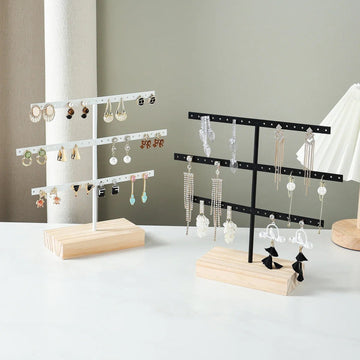
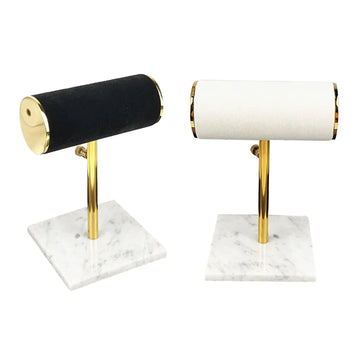
Four sober supports, to be associated by dominant material.


How this increases your average ticket
Investing in high-end displays is one of the most profitable investments a jewelry store can make. The reason is simple: the same piece, presented in a premium setting, can justify a price 20 to 50% higher without any hesitation from the customer. This mechanism is called perceived value.
| Presentation | Perceived value | Effect on the ticket |
|---|---|---|
| Standard plastic tray | Low | Pressure on the price |
| Clean acrylic tray | Medium | Accepted price |
| Linen / light suede tray | Good | Average ticket +10 to 20% |
| Deep velvet + controlled light | Very high | Average ticket +30 to 50% |
| Velvet + individual case + light + details | Premium | No negotiation |
In other words: moving from a decent presentation to a premium presentation generally pays off in a few weeks, simply through the effect on the average basket. It is one of the most profitable decisions a jeweler can make.
The faux pas to absolutely avoid
- Shiny plastic displays: they immediately kill the perceived value.
- Shaggy or worn velvet: velvet in poor condition is worse than no velvet at all.
- Too many decorative elements: luxury is in sobriety, not in profusion.
- Mixed finishes: shiny chrome + patinated brass + light wood in the same display case = chaos.
- Conspicuous price tags: large white tags on velvet = a total break from the luxury code.
- White fluorescent light: gives a pharmacy look, never jewelry.
- Pieces touching each other: in luxury, each piece of jewelry has its own personal space. At least 4 cm between two pieces.
Creating a luxury atmosphere for photos and an online store
The luxury atmosphere also plays out on screen: the photo is the customer's first contact with the piece. The same principles apply, with a few steps specific to photography.
A sober background and a dominant material
Photograph the piece on the dominant material of your staging, without pattern or extraneous objects. A matte velvet or suede reflects very little and makes the metal and stones stand out.
Soft, side lighting
Place the light source to the side, at the height of the jewelry, and avoid direct flash: it flattens the reliefs and creates reflections on the stones. Warm, diffused light gives the same feeling of a case as in person.
A framing that leaves room
- Leave space around the piece, as in a display case.
- Keep the same background and angle for the entire collection.
- Show a close-up detail, then an overall view.

Where to start to set up a luxury atmosphere?
You don't dress an entire store at once. Here is the order that gives the most effect, step by step.
| Priority | Action | Expected effect |
|---|---|---|
| 1 | Warm, directional lighting | The case is hinted at from the display window |
| 2 | Trays and cushions in the dominant material | Immediate consistency |
| 3 | Busts and supports of varying heights | Relief and hierarchy |
| 4 | Details: tags, packaging, fragrance | High-end finish |
Start with the lighting
It is the action that changes perception the most for the least amount of equipment. A warm base of 2700 K to 3000 K and an accent of 3500 K on the flagship piece already transforms the space.
Continue with the trays and cushions
These elements cover most of what the customer sees. A single dominant material, on all trays, establishes consistency even before adding busts.
Finish with the details
Discreet tags, individual cushions for flagship pieces, impeccable glass: these finishes count in the end, when the whole is already sober and readable.

A luxury atmosphere in a store, on a stand, or at home
The codes of luxury do not depend on the surface area. They are transposed from the store to the living room table, and even to the bedroom dressing table.
In store: play with depth
A display case or a central piece of furniture allows you to prioritize several planes. Keep one flagship piece per display case and leave the walls sober so that the gaze remains on the jewelry.
On a trade show stand: fit everything in a small space
A tray, a flagship piece, warm lighting: three elements are enough to signal high-end. It is better to show fewer pieces, well staged.
At home: a dressing table that acts as a case
A matte tray, a small cushion for the piece of the day, and a soft lamp are enough. Put away the rest: empty space is part of the effect.

Maintaining a luxury atmosphere over the weeks
A luxury atmosphere quickly falls apart if the materials age poorly. A few simple steps maintain it.
Daily steps
- Wipe the glass and surfaces with a soft cloth.
- Put each piece back in its place, without them touching.
- Check the lighting: a weakening bulb changes the entire color.
Each material has its own step
| Material | Maintenance step |
|---|---|
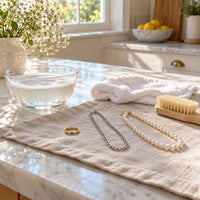
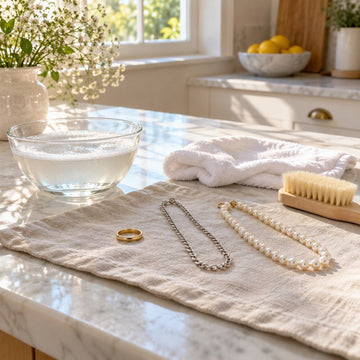
| Velvet | Soft brush in the direction of the nap, away from moisture |
| Suede | Soft brush or soft adhesive roller |
| Leather and faux leather | Slightly damp soft cloth, then dry cloth |
| Marble and stone | Soft cloth, without acidic products |
| Matte metal | Dry cloth, without rubbing hard |
When to replace a display?
As soon as the material becomes shiny, stained, or loses its color. Worn velvet does more harm than no velvet: replace it before it damages the image of the entire display case.

FAQ – Displays and luxury atmosphere
What is the best display material for a luxury atmosphere?
Deep matte velvet remains the absolute archetype, followed by suede for light atmospheres, marble for contemporary, and leather for masculine. Three materials maximum in the same staging.
Is burgundy velvet absolutely necessary?
No. Burgundy velvet is emblematic of classic jewelry, but forest green, midnight blue, plum, or taupe velvet create just as much of a luxury atmosphere — often more contemporary.
How much should be invested in premium displays?
For a standard jewelry display case, a coherent kit of velvet or suede displays represents a moderate investment compared to the effect on the average ticket. The return on investment is generally measured in weeks.
How to avoid the "kitsch" effect when seeking luxury?
By strictly limiting colors (3 maximum), materials (3 maximum), decorative accessories (1 per linear meter), and keeping 40% empty space. Kitsch always comes from profusion, never from sobriety.
What lighting gives the most luxury look?
A warm atmosphere of 2700 K to 3000 K with directional accents of 3500 K on the stones, CRI greater than 90. Absolutely avoid any lighting beyond 4000 K for the atmosphere.
Is an individual display needed for each piece?
Not for all, but yes for flagship pieces. The exceptional piece must have its own cushion, its own support, or its own case to signal its status.
Can luxury work for affordable jewelry?
Absolutely. Premium staging is even particularly profitable on mid-priced pieces: it allows you to justify the price, reduce the pressure to negotiate, and increase the average ticket without touching the catalog.
What lamp to choose for a luxury atmosphere?
A lamp with warm light, between 2700 K and 3000 K, with a color rendering index greater than 90. Add a small directional spotlight around 3500 K to make the flagship piece shine.
How to create a luxury atmosphere for an online store?
Always photograph on the same matte material, with soft, side lighting, and leave space around each piece. The consistency of the background and the angle creates the luxury atmosphere of a collection.
Get our next articles
Tips, guides and new arrivals, straight to your inbox.