
























Jewelry Merchandising: 7 Tips for a Display Case That Sells
Jewelry merchandising: 7 tips for a shop window that sells
A successful jewelry shop window is never left to chance. Behind every eye-catching display lies a real merchandising strategy: layout, heights, colors, lighting, and staging. The good news: these techniques are accessible to everyone.
Here are 7 practical tips to transform your shop window into a real sales tool, whether you are a jeweler, designer, or retailer.
In this guide, jewelry merchandising is broken down into seven practical levers, then into methods for preparing, adapting, and measuring your shop window.

1. Play with heights and levels
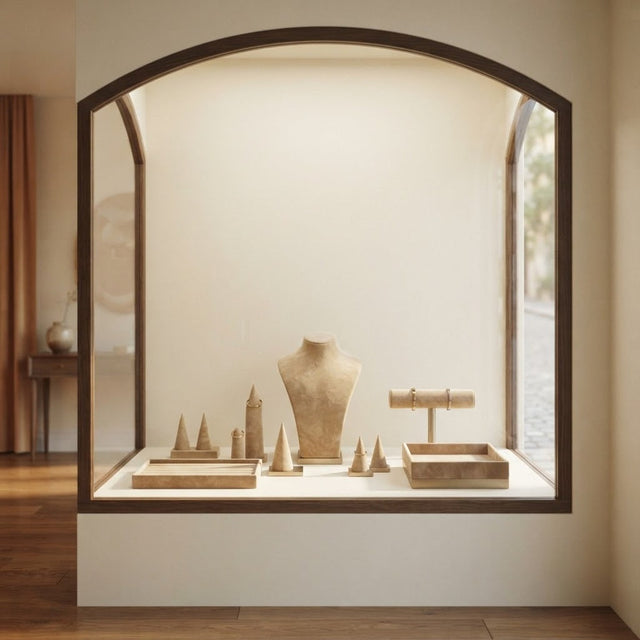
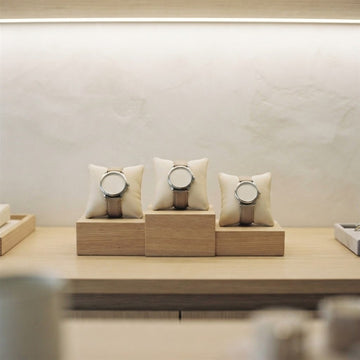
A flat, uniform shop window bores the eye. Create depth by layering your displays: podiums, tiered supports, tall busts, and low trays. The eye naturally travels from the highest point to the lowest, allowing you to guide attention toward your flagship pieces.
2. Tell a story
Shop windows that sell tell a story: a season, a theme, an atmosphere, a capsule collection. Visual storytelling creates an emotion and makes people want to stop. Choose a common thread (color, material, occasion such as a wedding or the holidays) and apply it to the entire display.

3. Master your color palette
Too many colors kill the impact. Limit yourself to two or three coordinated shades for your backgrounds and displays, in line with your visual identity. A neutral background (black, gray, beige, white) highlights the jewelry, while a targeted touch of color draws the eye to a specific piece.
4. Perfect the lighting
Lighting is the secret weapon of jewelry merchandising. It reveals the sparkle of stones and the shine of metals.
- Use multiple light sources to avoid harsh shadows.
- Adapt the temperature: warm light for gold, cooler for silver.
- Illuminate flagship pieces with a dedicated light source.

5. Create focal points
Every shop window needs a "hero": a featured piece that immediately captures attention. Place it at eye level, isolated, on a distinct display. This focal point serves as an anchor: it attracts passersby, who then discover the rest of your offer.
6. Let your pieces breathe
The most common mistake is overcrowding. A saturated shop window gives the impression of a clearance sale and drowns the jewelry. Dare to use empty space: negative space enhances each piece and creates a more high-end image. It is better to display fewer pieces of jewelry, but to stage them perfectly.

7. Display prices strategically
Transparency reassures. Indicate prices with elegant, legible labels that are consistent with your image. You can also create zones by price range to help customers orient themselves. A well-presented price removes a barrier to purchase and invites them to enter.
| Price range zone | Role in the shop window | Placement |
|---|---|---|
| Entry-level | Attracts and reassures | At the front, within sight |
| Mid-range | Core of the offer | At eye level |
| Flagship pieces | Inspire dreams | Isolated and well lit |
Refresh regularly
A static shop window becomes invisible to regulars. Change your display with the seasons and key sales periods. The modularity of your displays makes these rotations easier without having to buy everything again, and each new display gives people another reason to stop.
Jewelry merchandising: preparing your shop window before placing the first piece of jewelry
Good jewelry merchandising begins before the first display. Asking a few questions beforehand prevents moving the same pieces ten times.
Who do you want to attract and what do you want to sell?
Define your target audience (gifts, everyday jewelry, wedding pieces) and the goal for the period: launch a collection, highlight a flagship piece, support a key sales period.
This answer determines the flagship piece, the colors, and the common thread. Write it down in one sentence: it will serve as a compass for every choice.
How to measure the space and the reading direction?
Measure the width, height, and depth of the shop window, then draw it on paper with the displays to scale. This allows you to test several compositions without moving a single object.
The eye usually reads from left to right: place the flagship piece in the left third or in the center, and let the rest unfold to the right.
What display inventory should you plan for?
Make a list of what you own: busts, trays, cushions, bars, tiered supports. You need varied heights, a consistent family of materials, and a few neutral pieces to fill in.
How much time should you dedicate to the shop window each week?
Plan a fixed time slot, for example half an hour at the beginning of the week, to clean, adjust, and photograph. Consistency matters more than occasional major overhauls.
- At least three different heights.
- A solid-colored background or fabric to unify the composition.
- A few spare supports for theme changes.

Arranging each jewelry family: rings, necklaces, bracelets, earrings
Each type of jewelry has its own presentation method. The right support prevents the piece from sagging, tangling, or disappearing.
How to display rings?
On cones, rolls, or slotted trays, flat or slightly tilted. Group them by style and height, never all at the same level.
How to display necklaces?
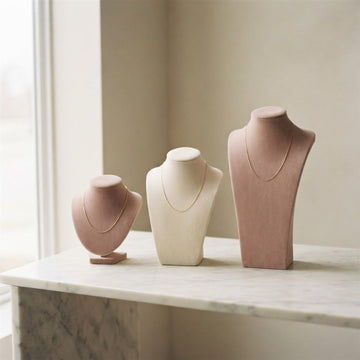
A bust or bar support gives the necklace its worn shape. Leave space between two necklaces so that each chain can be seen.
How to display bracelets and watches?
A cylindrical bar, cushion, or rounded support restores the shape of the wrist. Align them at the same height, side by side, for a clean serial effect.
How to display earrings?
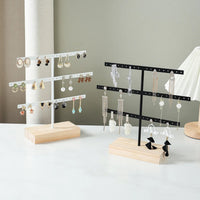
A stand, frame, or perforated card keeps pairs together and visible from the front. One pair per slot: never mix two pairs.
How to display jewelry sets and ensembles?
Bring together the necklace, bracelet, and earrings on the same tray or on supports of the same shade. The customer immediately visualizes the worn ensemble, and the group purchase becomes obvious.
| Jewelry family | Suitable support | Placement guideline |
|---|---|---|
| Rings | Cone, roll, slotted tray | By style, at varied heights |
| Necklaces | Bust, bar support | Space between each chain |
| Bracelets and watches | Bar, cushion, rounded support | Aligned at the same height |
| Earrings | Stand, frame, perforated card | One pair per slot |
Measuring the effect of your shop window and adjusting it
A shop window is judged by what it triggers: a stop, a photo, an entry. Observing these actions allows you to adjust without spending.
What to look for to know if the shop window is working?
Count for a few days the passersby who stop, those who enter, and the pieces they point out. Also note the most frequently asked questions in the store.
Why only change one element at a time?
If you change the lighting, colors, and heights on the same day, you won't know what worked. Change one lever, observe, then move on to the next.
How to keep a shop window log?
A photo of each composition, the date, the displayed pieces, and your observations are enough. This log prevents repeating the same mistakes and allows you to quickly find a composition that worked well.
When to decide that a shop window needs to change?
When passersby no longer stop, when the flagship piece is sold, or when a key sales period approaches. A planned change is better than a forced one.
Always keep a backup composition ready, even a very simple one, to react quickly.
- A front photo, taken at the same time.
- The list of displayed pieces.
- A line of feedback: what attracts, what leaves indifferent.

Applying jewelry merchandising to your online store
The rules of the shop window also apply on screen: hierarchy, colors, breathing room, and the staging of signature pieces.
How to apply the rule of levels on a page?
On a page, levels become hierarchy: a large image for the signature piece, then smaller visuals for the rest of the collection. The eye follows the same path as in a shop window.
What background to choose for photographing jewelry?
A plain, neutral background, lit consistently, gives coherence to the entire collection. Use the same palette as your shop window so that the store and website look alike.
Should you leave empty space around products?
Yes, for the same reasons as in a shop window: space around a piece of jewelry highlights it. Avoid cramming ten photos together when three well-framed ones make a bigger impact.

Adapting jewelry merchandising to the point of sale
The same principles apply everywhere, but they are adjusted differently in a shop window, on a stand, or at the checkout.
Shop window: what to prioritize?
The shop window has one mission: to stop passersby. Focus on the focal point, lighting, and the common thread, and save the details (labels, variants) for inside.
Market or trade show stand: what adaptations?
The customer approaches and touches. Place the pieces within reach on several levels, keep a plain tablecloth, and provide lightweight supports that are easy to assemble and store.
Counter and checkout display: how to make the most of them?
The counter is where the customer lingers. A small display of accessible pieces, neatly arranged and well lit, invites impulse purchases without cluttering the space.
How to take your customers into account?
Gift-buying customers look for clear cues and ready-to-gift sets. Designer customers love the material and the details. Adapt the density of the shop window to those who look at it.
| Location | Priority | Suitable supports |
|---|---|---|
| Shop window | Stop passersby | Busts, shelving, focal point |
| Market stand | Make pieces accessible | Lightweight and modular supports |
| Counter | Retain the customer | Small trays and cushions |
A shop window calendar: highlights and staging
A shop window that follows the year gives people a reason to come back and look. A simple calendar prevents leaving it to the last minute.
What highlights to plan for the year?
- The end-of-year holidays, for gifts and sparkling pieces.
- Valentine's Day, for symbolic jewelry.
- Mother's Day, for personal pieces.
- The wedding season, for adornments and delicate jewelry.
- Back-to-school season, for everyday jewelry.
How to prepare a shop window change?
Plan the theme, palette, and pieces several days in advance. Empty and clean the shop window, then assemble the new composition all at once to limit the time it remains half empty.
How to reuse your displays from one season to the next?
Choose neutral and modular supports: a change of fabric, background, or signature piece is enough to renew the atmosphere. This way, you avoid buying everything new for each theme.

Jewelry merchandising: the mistakes that make customers walk past without stopping
A few flaws recur in almost every shop window that fails to stop anyone. Spotting them is already halfway there.
Why does a uniform shop window stop no one?
All the displays at the same height, all the jewelry the same size: the eye glides over without finding anything to focus on. Vary the levels and shapes to create rhythm.
What cleanliness flaws are most noticeable?
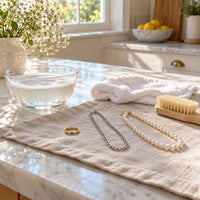
Dust, fingerprints, crumpled labels, faded background: in bright light, these details lower the perceived value of the jewelry. A quick cleaning every morning is enough.
How to avoid the gap between the shop window and the interior?
The shop window makes a promise that the interior must keep. Replicate the colors, materials, and spirit of the shop window inside the store so that the customer feels they are in the right place.
When should you remove a piece from the shop window?
When it is damaged, tarnished, or duplicates another. An empty space is better than a piece that detracts from the whole: absence is less noticeable than a flaw.
| Mistake | Effect on the customer | Good practice |
|---|---|---|
| Everything at the same level | The eye glides over | Tier the displays |
| Too many pieces | Bargain basement impression | Leave empty space |
| Dusty supports | Dull jewelry | Clean every morning |
| Shop window never changed | Invisible to regulars | Renew with the seasons |
Our favorites for creating a shop window
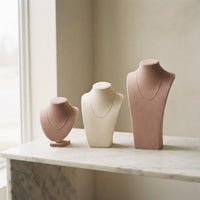
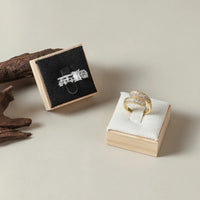
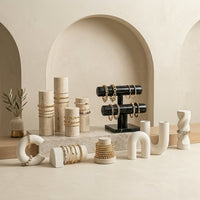
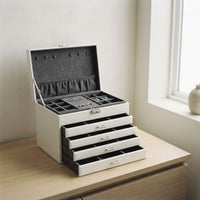
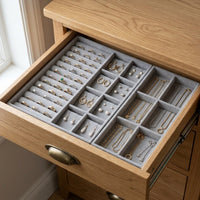
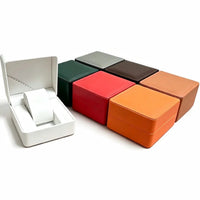
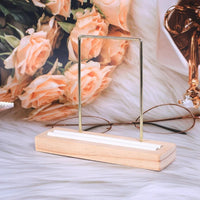
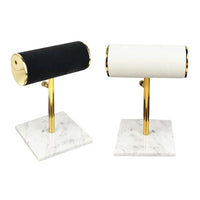
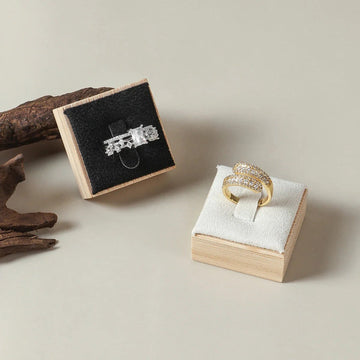
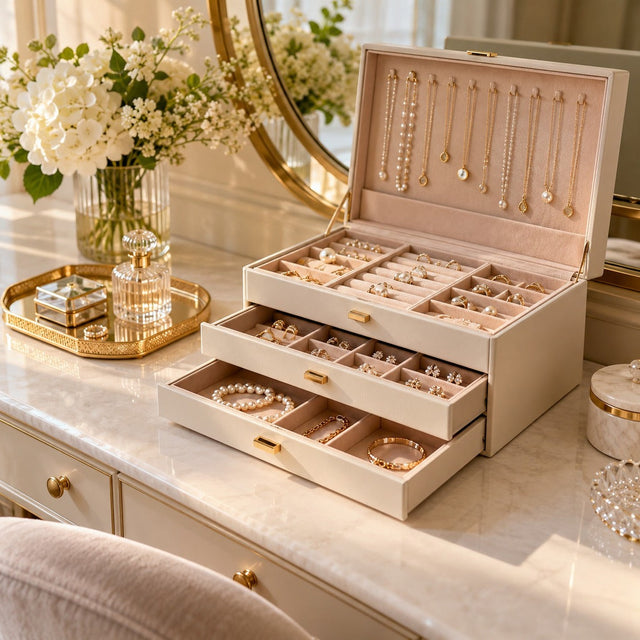
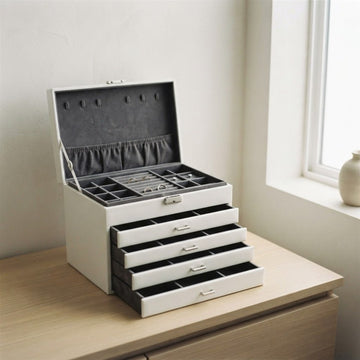
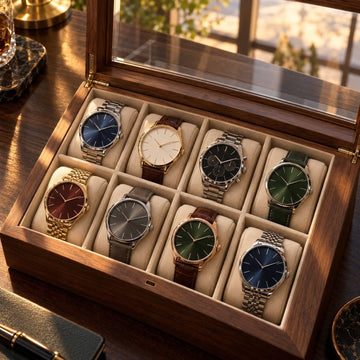
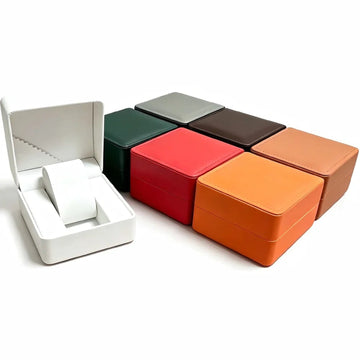
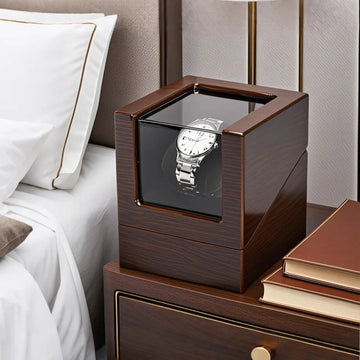
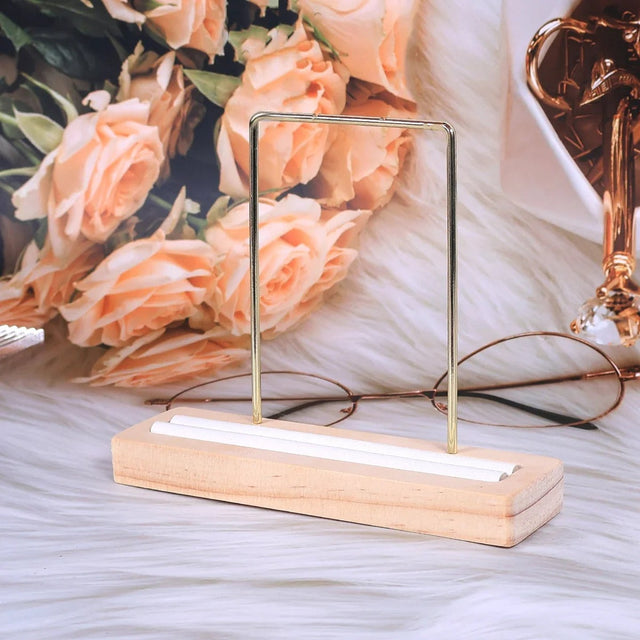
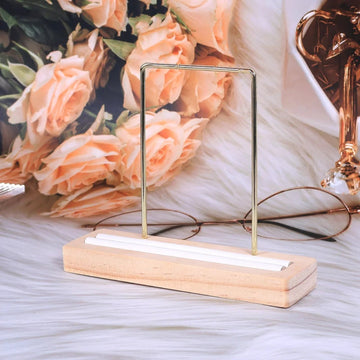
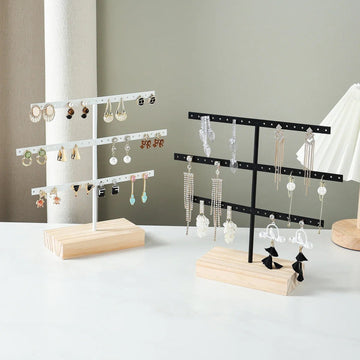
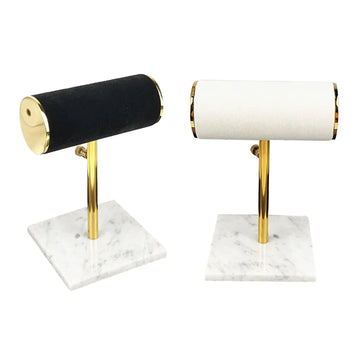
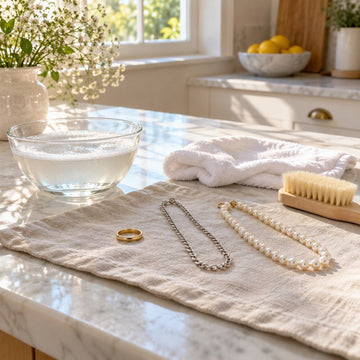
Four models to build a composition with depth: a shop window support, busts, a wooden display, and trays. Discover many more in the velvet jewelry display and jewelry bust collections.


To go further: The role of colors in jewelry displays, How to take good photos of jewelry?, What mistakes to avoid when displaying jewelry?, Individual or multi-jewelry display: which one to choose for a shop window? and How to choose the right jewelry display for your shop window.
Frequently asked questions about jewelry merchandising
How many pieces of jewelry should be in a shop window?
There is no universal number: the right quantity leaves space around each piece. If the eye no longer knows where to rest, remove a few pieces of jewelry.
At what height should the signature piece be placed?
At eye level, isolated on a distinct display. It attracts passersby, who then discover the rest of your collection.
How often should you change your shop window?
With the seasons and major sales periods, such as the holidays or the wedding season. Regular rotation prevents the shop window from becoming invisible to regulars.
What colors should you choose for a jewelry shop window?
Two or three coordinated shades, with a neutral background (black, gray, beige, white) and a touch of color on the piece to be highlighted.
Should prices be displayed in the shop window?
Transparency reassures: elegant and legible labels, consistent with your image, help the customer find their way. You can also create zones by price range.
How to light a jewelry shop window?
With several light sources to avoid harsh shadows, warm light for gold, cooler for silver, and a dedicated light point for the signature piece.
Conclusion
Jewelry merchandising is based on simple principles: depth, a story, a mastered palette, good lighting, focal points, space, and clear prices. Apply these 7 tips and your shop window will become a real customer magnet.
To create an effective display, explore our jewelry display collection and give your creations the staging they deserve.

Get our next articles
Tips, guides and new arrivals, straight to your inbox.